
Wildy Logo
(020) 7242 5778
enquiries@wildy.com

Book of the Month

Cover of Housing Law Handbook

Housing Law Handbook

Price: £85.00

Planning Law:
A Practitioner's
Handbook 2nd ed


 William Webster, Robert Weatherley


Welcome to Wildys

Watch


Corporate Insolvency Practice:
Litigation, Procedure
and Precedents 3rd ed


 Mark Watson-Gandy


Offers for Newly Called Barristers & Students

Special Discounts for Newly Called & Students

Read More ...


Secondhand & Out of Print

Browse Secondhand Online

Read More...


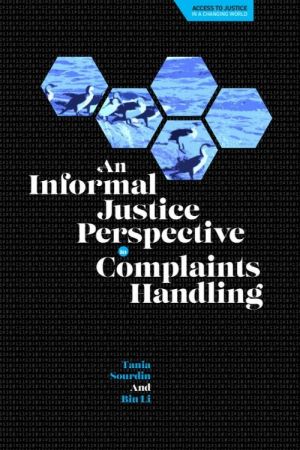
An Informal Justice Perspective to Complaints Handling


ISBN13: 9781399543255
To be Published: December 2026
Publisher: Edinburgh University Press
Country of Publication: UK
Format: Hardback
Price: £90.00


Provides the first in-depth examination of complaints issues through the lens of access to informal justice and alternative dispute resolution

  • Features an extensive literature review that considers a wide range of sources from the UK, Australia, Canada, Denmark, Germany, Hong Kong and the US
  • Integrates a vast range of research and best practice information published by dedicated complaints handling bodies across different jurisdictions, such as the UK Parliamentary and Health Service Ombudsman, Commonwealth Ombudsman in Australia, Federal Ombuds in Canada and the New South Wales Ombudsman
  • Brings together best practice research from both international and domestic public and private sector studies to promote the importance of having a clear complaints management framework and specific staff who are employed to manage and respond to complaints
  • Considers international standards (e.g. ISO 10002 Quality Management: Guidelines for Complaint Handling in Organizations) as well as organisational and regulatory requirements such as the need to report on risk and the potential impacts of serious complaints

This book rethinks the way complaints should be interpreted by organisations, looking at them as opportunities to improve rather than things to be avoided. Instead, it argues that effective complaint handling can offer another pathway to ‘informal’ justice as opposed to ‘formal’ justice primarily delivered by courts and tribunals. It can promote procedural fairness, enable access to justice and save time and costs while improving products and services. With practical case study examples and practical approaches grounded in research, it provides informed guidance on the implementation of a complaints handling framework.

The book draws on an international range of sources, examining complaints handling in the private and public sectors in Australia, Canada and Europe and integrating best practices from specialised complaints handling bodies, including the UK Parliamentary and Health Service Ombudsman, Commonwealth Ombudsman in Australia, Federal Ombuds in Canada and the New South Wales Ombudsman.

It examines the processes used, how technology is changing the way in which complaints arise and are dealt with, and presents an organisational as well as a complainant perspective.


Subjects:
Law and Society
Contents:
Preface

Introduction: Complaint, Complaints Management and Justice
Introduction
Informal Justice and Access to Justice
Complaint Behaviour
Technology and Social Networks

1. Measuring Effective Complaints Handling
Introduction
Private Sector Complaints
Government Sector
Consumer Sentiment and Complaints
Research into Consumer Behaviour

2. Complaint Policy
Introduction
Leadership and Responsiveness
Complaints Policy
Accessibility
Encouraging Feedback
Responsiveness
Time Frames and Tracking Complaints
Assessing Complaints
Handling the Complaint
Resolving Complaints
Gathering and Using Information
Monitoring and Improvement

3. Enabling Complaints
Introduction
Understanding Barriers to Make a Complaint
Benefits of Making it Easy to Complain
People Focused Complaints Handling
Visibility and Transparency
Accessibility
Eliminating Fear of Retribution as a Barrier to Complaints
Consumer Vulnerability
Third-Party Complaint Handlers
Removing Financial Barriers to Making a Complaint
The Impact of Technology and Social Media on Making a Complaint
Accessible Communication Styles

4. Managing and Assessing Complaints
Introduction
Management and Assessment Processes
Impartiality and Fairness

5. Finalising Complaints
Introduction
Accountability and Quality Assurance
Gathering and Using Data
Using Complaints to Innovate
Continuous Improvement and Feedback
Improving Broader Organisational or Systemic Problems
Feedback on the Complaint Management System
Dissatisfaction with Outcomes and Escalation Processes
Prevention of Ongoing Disputes

6. Complaint Skills
Introduction
Importance of Communication Skills
Skills and Approaches to Manage Unreasonable Complainant

Conclusion – The Future of Complaint Handling
Introduction
The Rise of AI and Complaints
Clarity and Purpose – Know What You Want to Achieve and Have a Plan About How to Get There
Empowering Complainants







