
The eBooks we sell are sold as a single-user licence and are intended for the end user only.
The sale of some eBooks are restricted to certain countries. To alert you to such restrictions, please select the country of the billing address of your credit or debit card you wish to use for payment.
For further information see https://www.wildy.com/ebook-formats
Once the order is confirmed an e-mail will be sent to you to allow you to download the eBook. For UK purchases this will be automatic. For purchases outside the UK a member of staff will need to confirm the sale. (Staff are available to do this during normal business hours, Mon-Fri 8:30-17:00 UK time)
All eBooks are supplied firm sale and cannot be returned. If you believe there is a fault with your eBook then contact us on ebooks@wildy.com and we will help in resolving the issue. This does not affect your statutory rights.
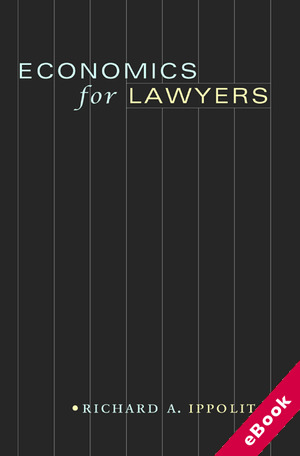
Whether dealing with contracts, tort actions, or government regulations, lawyers are more likely to be successful if they are conversant in economics. Economics for Lawyers provides the essential tools to understand the economic basis of law. Through rigorous analysis illustrated with simple graphs and a wide range of legal examples, Richard Ippolito focuses on a few key concepts and shows how they play out in numerous applications. There are everyday problems: What is the social cost of legislation enforcing below-market prices, minimum wages, milk regulation, and non-competitive pricing? Why are matinee movies cheaper than nighttime showings? And then there are broader questions: What is the patent system's role in the market for intellectual property rights? How does one think about externalities like airport noise? Is the free market, a regulated solution, or tort law the best way to deliver the "efficient amount of harm" in the workplace? What is the best approach to the question of economic compensation due to a person falsely imprisoned?
Along the way, readers learn what economists mean when they talk about sorting, signaling, reputational assets, lemons markets, moral hazard, and adverse selection. They will learn a new vocabulary and a whole new way of thinking about the world they live in, and will be more productive in their professions.










