
The eBooks we sell are sold as a single-user licence and are intended for the end user only.
The sale of some eBooks are restricted to certain countries. To alert you to such restrictions, please select the country of the billing address of your credit or debit card you wish to use for payment.
For further information see https://www.wildy.com/ebook-formats
Once the order is confirmed an e-mail will be sent to you to allow you to download the eBook. For UK purchases this will be automatic. For purchases outside the UK a member of staff will need to confirm the sale. (Staff are available to do this during normal business hours, Mon-Fri 8:30-17:00 UK time)
All eBooks are supplied firm sale and cannot be returned. If you believe there is a fault with your eBook then contact us on ebooks@wildy.com and we will help in resolving the issue. This does not affect your statutory rights.
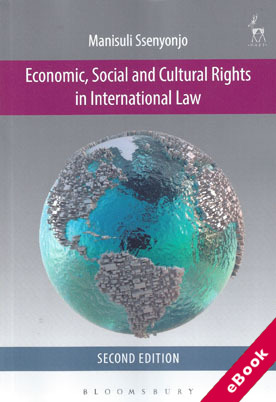
Since the first edition of Economic, Social and Cultural Rights in International Law was published in 2009, there have been several important developments including:-
It has been fully updated to include new material and up-to-date coverage of the case law of human rights bodies and national courts on ESC rights. In addition to the rights to health, education and work covered in the first edition, the second edition analyses new developments including rights not covered in the first edition such as trade union rights, right to an adequate standard of living (adequate food, water and housing), right to social security and the right to take part in cultural life.
It also considers the relationship of the International Covenant on Economic, Social and Cultural Rights (ICESCR) to other areas of international law; admissibility under the Optional Protocol to the ICESCR; regional protection of ESC rights; more examples of the domestic protection of ESC rights; the protection of ESC rights of vulnerable groups (such as women, children, youth, persons with disabilities, older persons, prisoners, minorities, migrants, indigenous people, refugees and internally displaced persons); and contemporary challenges to ESC rights including poverty, armed conflicts and terrorism.
All these developments presented in a clear and illuminating manner, will be of use to the judiciary, human rights practitioners, human rights activists, government institutions, academics, and students alike.










