
The eBooks we sell are sold as a single-user licence and are intended for the end user only.
The sale of some eBooks are restricted to certain countries. To alert you to such restrictions, please select the country of the billing address of your credit or debit card you wish to use for payment.
For further information see https://www.wildy.com/ebook-formats
Once the order is confirmed an e-mail will be sent to you to allow you to download the eBook. For UK purchases this will be automatic. For purchases outside the UK a member of staff will need to confirm the sale. (Staff are available to do this during normal business hours, Mon-Fri 8:30-17:00 UK time)
All eBooks are supplied firm sale and cannot be returned. If you believe there is a fault with your eBook then contact us on ebooks@wildy.com and we will help in resolving the issue. This does not affect your statutory rights.
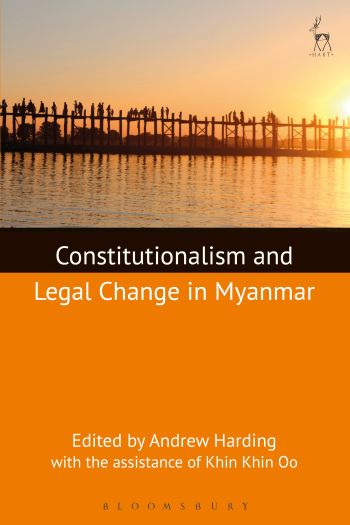
Myanmar’s Constitution of 2008 was the ‘road map’ for the reform process that began in 2011. Despite extensive criticism of this Constitution for its emphasis on the role of the military, much progress has been made towards constitutional government and law reform.
The opposition led by Daw Aung San Suu Kyi has repeatedly called for constitutional changes, and currently the Constitution is subject to a review process which is intended to be completed before the elections scheduled for 2015. Much has been made of the Constitution’s rigidity, which is seen as an obstacle to reform and inconsistent with a rapidly transforming state and society, embracing the rule of law, human rights and multi-party democracy. Nonetheless, the Constitution is also seen as having potential as a very positive force for reform.
Many issues arise now for constitutionalism and constitutional change arise: presidency; federalism and territorial governance; the status of minorities and freedom of religion; civil liberties in what is described as a ‘discipline-flourishing democracy’; the courts, justice and the rule of law; the electoral system; and many more. The present book is an attempt to gauge the extent and potential for the entrenchment of constitutionalism in Myanmar in a rapidly changing environment.










