
The eBooks we sell are sold as a single-user licence and are intended for the end user only.
The sale of some eBooks are restricted to certain countries. To alert you to such restrictions, please select the country of the billing address of your credit or debit card you wish to use for payment.
For further information see https://www.wildy.com/ebook-formats
Once the order is confirmed an e-mail will be sent to you to allow you to download the eBook. For UK purchases this will be automatic. For purchases outside the UK a member of staff will need to confirm the sale. (Staff are available to do this during normal business hours, Mon-Fri 8:30-17:00 UK time)
All eBooks are supplied firm sale and cannot be returned. If you believe there is a fault with your eBook then contact us on ebooks@wildy.com and we will help in resolving the issue. This does not affect your statutory rights.
Erosions of individual liberties in the name of anti-terrorism are on going in liberal democracies, unlike responses to other violent acts, and those erosions remain controversial.
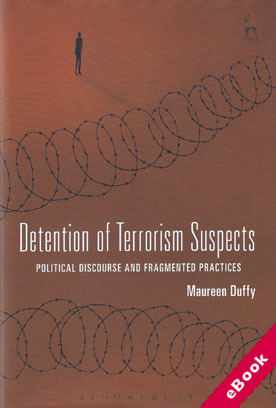
The focus of this book is on the relationship between political discourse and resulting perceptions of the threats posed by terrorism. It specifically links that discourse to problematic and evolving practices around terrorism detentions that happen outside of traditional criminal and wartime paradigms, with examples including the detentions at Guantanamo Bay or security certificates in Canada.
This book argues that biased political discourse has, in some respects, continued to fuel public misconceptions about terrorism, which have then led to problematic legal enactments, supported by those misconceptions. It critiques political arguments that began after 9/11, many of which are still foundational as terrorism detention practices evolve.
The focus is on language emanating from the U.S., and the book links this language to examples of changed detention practices from the U.S., Canada, the UK, and Australia. Terrorism is undoubtedly a real threat, but that does not mean that all perceptions of how to respond to terrorism are valid. As international terrorism continues to grow and to change, this book offers valuable insights into problems that have arisen from past responses, with the objective of avoiding those problems going forward.










