
The eBooks we sell are sold as a single-user licence and are intended for the end user only.
The sale of some eBooks are restricted to certain countries. To alert you to such restrictions, please select the country of the billing address of your credit or debit card you wish to use for payment.
For further information see https://www.wildy.com/ebook-formats
Once the order is confirmed an e-mail will be sent to you to allow you to download the eBook. For UK purchases this will be automatic. For purchases outside the UK a member of staff will need to confirm the sale. (Staff are available to do this during normal business hours, Mon-Fri 8:30-17:00 UK time)
All eBooks are supplied firm sale and cannot be returned. If you believe there is a fault with your eBook then contact us on ebooks@wildy.com and we will help in resolving the issue. This does not affect your statutory rights.
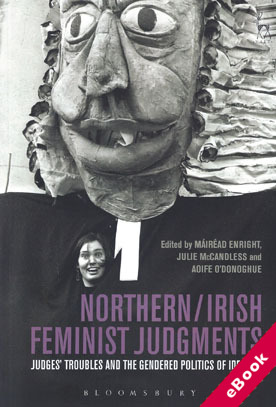
The Irish project Irish Feminist Judgments: Judges' Troubles and the Gendered Politics of Identity builds upon the work of the feminist judgment project completed at Durham and Kent and which integrated feminist theory and judicial method, re-writing influential judgments from feminist perspectives.
The project will produce an anthology of re-written judgments from Northern/Ireland as well as innovative web resources with materials of use to both academics and civil society. Bringing together academic partners at institutions across the UK and Ireland including the Law Schools at Kent, LSE, UCD, UCC, Queen's Belfast, and the University of Ulster, with solicitors, barristers and civil society groups, the project creates a broad new community of Irish feminist scholars around an ambitious Northern/Irish Feminist Judgments Project.
The project will create tangible resources which can be used to engender a societal dialogue about legal decision-making and social change, developing dynamic resources for future research and teaching in judicial studies. The project focuses on the gendered political roles of judges in contexts of transition from conflict, colonialism and religious patriarchy.










