
The eBooks we sell are sold as a single-user licence and are intended for the end user only.
The sale of some eBooks are restricted to certain countries. To alert you to such restrictions, please select the country of the billing address of your credit or debit card you wish to use for payment.
For further information see https://www.wildy.com/ebook-formats
Once the order is confirmed an e-mail will be sent to you to allow you to download the eBook. For UK purchases this will be automatic. For purchases outside the UK a member of staff will need to confirm the sale. (Staff are available to do this during normal business hours, Mon-Fri 8:30-17:00 UK time)
All eBooks are supplied firm sale and cannot be returned. If you believe there is a fault with your eBook then contact us on ebooks@wildy.com and we will help in resolving the issue. This does not affect your statutory rights.
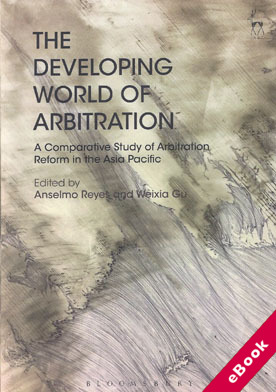
This edited collection studies the recent emergence of Asia Pacific jurisdictions and looks at how they are developing into regional or international arbitration centres thanks to various reform efforts and initiatives.
This book provides the most up-to-date and comprehensive analysis of the ways in which arbitration laws and practices are recently reformed in the Asia Pacific jurisdictions.
Leading contributors across the Asia Pacific region analyse twelve major jurisdictions representing varying patterns and degrees of development, whether top-down, bottom-up, or a hybrid. Setting the arbitration systems and reforms of each investigated jurisdiction in the context of its economic, political, and judicial dynamic, this book presents a first-time cross-jurisdiction comparative and contextual study of the developing world of arbitration in the Asia Pacific and contributes to the comparative international arbitration jurisprudence from a more Eastern perspective.
This book also aims to identify an Asia Pacific model of arbitration modernisation as distinct from the West and predicts the future trajectories of development and challenges in East-West arbitration competition.
This book will be an invaluable addition to the library of any academic and legal practitioner working on international arbitration.










