
The eBooks we sell are sold as a single-user licence and are intended for the end user only.
The sale of some eBooks are restricted to certain countries. To alert you to such restrictions, please select the country of the billing address of your credit or debit card you wish to use for payment.
For further information see https://www.wildy.com/ebook-formats
Once the order is confirmed an e-mail will be sent to you to allow you to download the eBook. For UK purchases this will be automatic. For purchases outside the UK a member of staff will need to confirm the sale. (Staff are available to do this during normal business hours, Mon-Fri 8:30-17:00 UK time)
All eBooks are supplied firm sale and cannot be returned. If you believe there is a fault with your eBook then contact us on ebooks@wildy.com and we will help in resolving the issue. This does not affect your statutory rights.
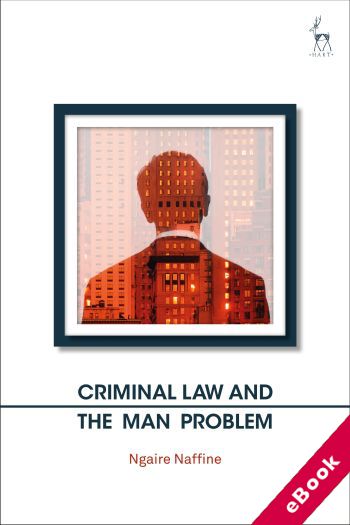
Men have always dominated the most basic precepts of the criminal legal world – its norms, its priorities and its character. Men have been the regulators and the regulated: the main subjects and objects of criminal law and by far the more dangerous sex. And yet men, as men, are still hardly talked about as the determining force within criminal law or in its exegesis. This book brings men into sharp focus, as the pervasively powerful interest group, whose wants and preoccupations have shaped the discipline. This constitutes the 'man problem' of criminal law.
This new analysis probes the unacknowledged thinking of generations of influential legal men, which includes the psychological and legal techniques that have obscured the operation of bias, even to the legal experts themselves. It explains how men's interests have influenced the most cherished legal norms, especially the rules of human contact, which were designed to protect men from other men, while specifically securing lawful sexual access to at least one woman. The aim is to test the discipline's broadest commitments to civility, and its trajectory towards the final resolution, when men and women were declared to be equal and equivalent legal persons. In the process it exposes the morally and intellectually limiting consequences of male power.











