
The eBooks we sell are sold as a single-user licence and are intended for the end user only.
The sale of some eBooks are restricted to certain countries. To alert you to such restrictions, please select the country of the billing address of your credit or debit card you wish to use for payment.
For further information see https://www.wildy.com/ebook-formats
Once the order is confirmed an e-mail will be sent to you to allow you to download the eBook. For UK purchases this will be automatic. For purchases outside the UK a member of staff will need to confirm the sale. (Staff are available to do this during normal business hours, Mon-Fri 8:30-17:00 UK time)
All eBooks are supplied firm sale and cannot be returned. If you believe there is a fault with your eBook then contact us on ebooks@wildy.com and we will help in resolving the issue. This does not affect your statutory rights.
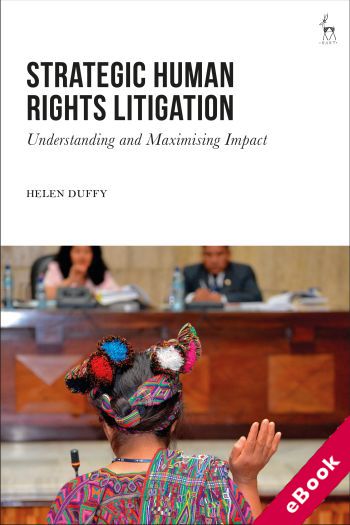
Strategic human rights litigation (SHRL) is a growing area of international practice yet one that remains relatively under-explored. Around the globe, advocates increasingly resort to national, regional and international courts and bodies ‘strategically’ – to protect and advance human rights in a way that has a positive impact beyond the particular outcome of the case, or the parties to the litigation.
This book provides a framework for understanding SHRL and its impact, alongside its limitations and the many tensions and challenges it gives rise to. It suggests a reframing of how we view impact in its multiple dimensions, positive and potentially negative. Five detailed case studies, drawn predominantly from the author’s own experience, explore litigation in a broad range of contexts (genocide in Guatemala; slavery in Niger; forced disappearance in Argentina; torture and detention in the ‘war on terror’; Palestinian land rights) to surface the complexity of the role of SHRL in the real world. The book considers the implications of the impact analysis for the development of effective litigation strategies in the future.











