
The eBooks we sell are sold as a single-user licence and are intended for the end user only.
The sale of some eBooks are restricted to certain countries. To alert you to such restrictions, please select the country of the billing address of your credit or debit card you wish to use for payment.
For further information see https://www.wildy.com/ebook-formats
Once the order is confirmed an e-mail will be sent to you to allow you to download the eBook. For UK purchases this will be automatic. For purchases outside the UK a member of staff will need to confirm the sale. (Staff are available to do this during normal business hours, Mon-Fri 8:30-17:00 UK time)
All eBooks are supplied firm sale and cannot be returned. If you believe there is a fault with your eBook then contact us on ebooks@wildy.com and we will help in resolving the issue. This does not affect your statutory rights.
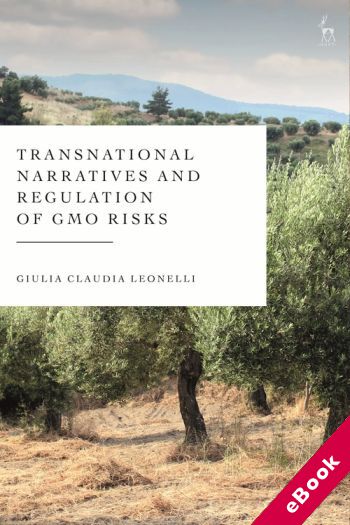
This book provides an innovative insight into the regulatory conundrum of genetically modified organisms (GMOs), deploying transnational legal analysis as a methodological framework to explore the most controversial area of risk governance.
The book deconstructs hegemonic and counter-hegemonic transnational narratives on the governance of GMO risks, cutting across US law, EU law, the WTO Agreement on Sanitary and Phytosanitary Measures, and hybrid standard-setting regimes. Should uncertain risks be run unless adverse effects have been conclusively established, and should regulators only act where this is cost-benefit effective? Should risk managers make a convincing case that a product or process is safe enough for the relevant uncertain risks to be socially acceptable? How can intractable transnational regulatory conflicts be solved?
The book complements a close analysis of regulatory frameworks and case law with a more encompassing perspective on the political, socio-economic and distributional implications of different approaches to the regulation of health and environmental risks at times of globalisation.
The GMO deadlock thus becomes a lens through which to investigate the underlying value systems, goals, and impacts of transnational discourses on risk governance. Against this backdrop, the normative strand of analysis points to the limited ability of science and procedural deliberation to generate authentic agreement and to identify normatively legitimate solutions, in the absence of pre-existing shared perspectives.











