
The eBooks we sell are sold as a single-user licence and are intended for the end user only.
The sale of some eBooks are restricted to certain countries. To alert you to such restrictions, please select the country of the billing address of your credit or debit card you wish to use for payment.
For further information see https://www.wildy.com/ebook-formats
Once the order is confirmed an e-mail will be sent to you to allow you to download the eBook. For UK purchases this will be automatic. For purchases outside the UK a member of staff will need to confirm the sale. (Staff are available to do this during normal business hours, Mon-Fri 8:30-17:00 UK time)
All eBooks are supplied firm sale and cannot be returned. If you believe there is a fault with your eBook then contact us on ebooks@wildy.com and we will help in resolving the issue. This does not affect your statutory rights.
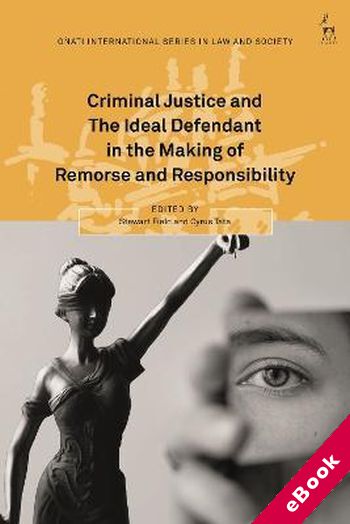
Using empirical research including interviews with judicial officers and transcripts of in-court sentencing hearings, this book investigates the varied techniques through which criminal justice decision-makers assess defendants. In particular, it considers the normative expectations that criminal justice systems have of defendants: that they should admit guilt, accept individual responsibility, and, in the process, show particular kinds of emotions, especially the authentic demonstration of remorse.
The book makes use of distinctive critical questioning to move beyond the usual questions of 'how' remorse is expressed and what weight this carries, to more searching questions relating to 'why' expressions of remorse are deemed to be important in decision-making. It places a particular emphasis on both the practical importance of the management of emotions to the efficient disposal of cases and the political symbolism of particular ways of doing so. It focuses on the construction of the ideally remorseful defendant, and in doing so, interrogates a number of assumptions that are usually taken for granted.
With 13 contributors from the UK, Australia, Canada, France, Denmark, the Netherlands, and Slovenia, the collection comprises a diverse range of studies across different procedural and jurisdictional settings, opening up new comparative possibilities along the way.










