
The eBooks we sell are sold as a single-user licence and are intended for the end user only.
The sale of some eBooks are restricted to certain countries. To alert you to such restrictions, please select the country of the billing address of your credit or debit card you wish to use for payment.
For further information see https://www.wildy.com/ebook-formats
Once the order is confirmed an e-mail will be sent to you to allow you to download the eBook. For UK purchases this will be automatic. For purchases outside the UK a member of staff will need to confirm the sale. (Staff are available to do this during normal business hours, Mon-Fri 8:30-17:00 UK time)
All eBooks are supplied firm sale and cannot be returned. If you believe there is a fault with your eBook then contact us on ebooks@wildy.com and we will help in resolving the issue. This does not affect your statutory rights.
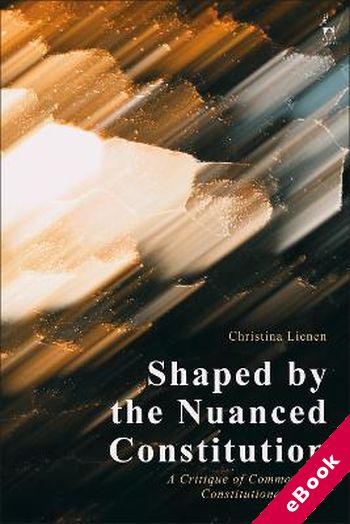
There is growing judicial, academic and political interest in the concept of common law constitutional rights. Concurrently, significant public law judgments, including R (Miller) v The Prime Minister, R (Begum) v Special Immigration Appeals Commission and R (Privacy International) v Investigatory Powers Tribunal, continue to sustain and enrich the academic debate on the nature of the UK constitution.
Bringing these two highly topical themes together, the book argues, firstly, that neither common law constitutionalism nor political constitutionalism adequately captures the nature of public law litigation because neither is fully able to account for the co-existence and interplay between parliamentary sovereignty and the rule of law. Advancing the idea of a ‘nuanced’ constitution instead, the book then provides an indepth analysis of common law constitutional rights, looking at their history, conceptual foundations, contemporary characteristics, coverage and resilience.
In doing so, this book highlights and re-conceptualises the dynamics and mechanisms of constitutional law adjudication and provides the first comprehensive critique of common law constitutional rights jurisprudence. It is centred around extensive case law analysis which focuses predominantly on recent Supreme Court judgments.










