
The eBooks we sell are sold as a single-user licence and are intended for the end user only.
The sale of some eBooks are restricted to certain countries. To alert you to such restrictions, please select the country of the billing address of your credit or debit card you wish to use for payment.
For further information see https://www.wildy.com/ebook-formats
Once the order is confirmed an e-mail will be sent to you to allow you to download the eBook. For UK purchases this will be automatic. For purchases outside the UK a member of staff will need to confirm the sale. (Staff are available to do this during normal business hours, Mon-Fri 8:30-17:00 UK time)
All eBooks are supplied firm sale and cannot be returned. If you believe there is a fault with your eBook then contact us on ebooks@wildy.com and we will help in resolving the issue. This does not affect your statutory rights.
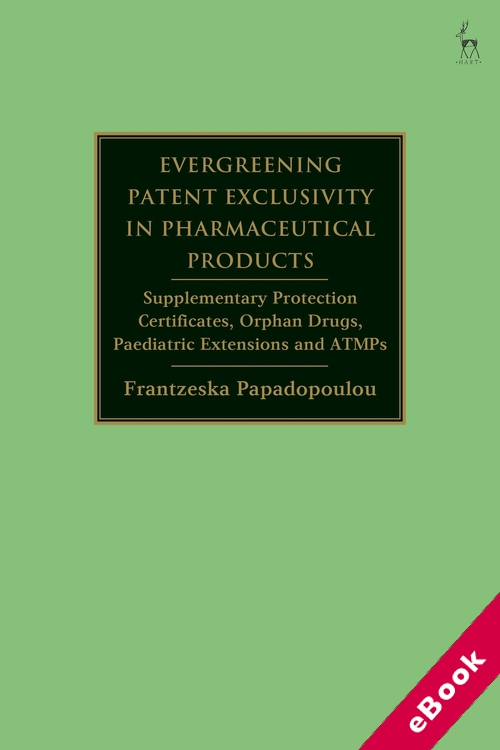
This book analyses 4 central pieces of EU pharmaceutical regulation: the Orphan Drugs Regulation, the Paediatric Regulation, the Supplementary Protection Certificate Regulation, and the ATMP (Advanced Therapy Medicinal Products) Regulation. These four regulatory instruments constitute focal points in the pharmaceutical industry's approach to modern business and legal strategy. Their central role is justified by the way these regulatory instruments interact with each other and with the patent system, and by the considerable impact they (as a whole) have for the evergreening of exclusive rights on pharmaceutical products.
The book guides the reader through the latest case law and legislative developments and discusses how these influence strategic legal and business choices in the pharmaceutical industry. It brings to the forefront the often-overlooked significance of the legislative architecture of the EU pharmaceutical regulatory framework, and evaluates its results through the lens of the efficiency test.
The book is an important resource for academics and practitioners interested in updated case law and an in-depth analysis of these four regulations. It is als











