
The eBooks we sell are sold as a single-user licence and are intended for the end user only.
The sale of some eBooks are restricted to certain countries. To alert you to such restrictions, please select the country of the billing address of your credit or debit card you wish to use for payment.
For further information see https://www.wildy.com/ebook-formats
Once the order is confirmed an e-mail will be sent to you to allow you to download the eBook. For UK purchases this will be automatic. For purchases outside the UK a member of staff will need to confirm the sale. (Staff are available to do this during normal business hours, Mon-Fri 8:30-17:00 UK time)
All eBooks are supplied firm sale and cannot be returned. If you believe there is a fault with your eBook then contact us on ebooks@wildy.com and we will help in resolving the issue. This does not affect your statutory rights.
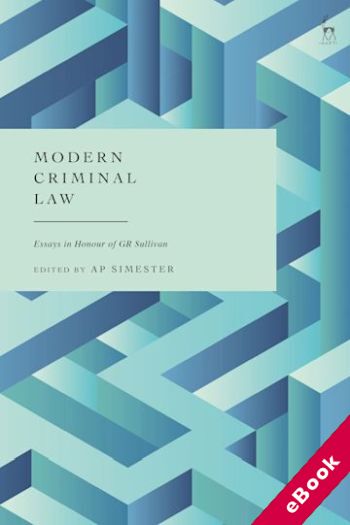
This book brings together leading scholars from the next generation of UK criminal lawyers to celebrate the work of GR Sullivan, Emeritus Professor at University College London, in the year of his retirement from writing Simester and Sullivan's Criminal Law: Theory and Doctrine.
The contributors examine many of the areas in which GR (Bob) Sullivan's own writing has been influential, ranging from general doctrines such as causation and culpability, across specific offences like theft and fraud, through defences including necessity and insanity; before turning, finally, to matters affecting the criminal process, notably challenges to the doctrine of precedent in criminal law.
Taken together, the essays are a powerful tribute to Bob's standing and influence upon modern criminal law. At the same time, individually they make sophisticated contributions to our understanding of some pressing issues in contemporary criminal law. The essays illustrate the increasing importance of theoretical argument in modern criminal law, as well as the manner in which doctrinal debates have become interwoven with arguments about criminalisation norms. The resulting collection is thus a tribute also to the character of modern academic criminal law, a character that Bob and the writers of his generation did so much to develop.










