
The eBooks we sell are sold as a single-user licence and are intended for the end user only.
The sale of some eBooks are restricted to certain countries. To alert you to such restrictions, please select the country of the billing address of your credit or debit card you wish to use for payment.
For further information see https://www.wildy.com/ebook-formats
Once the order is confirmed an e-mail will be sent to you to allow you to download the eBook. For UK purchases this will be automatic. For purchases outside the UK a member of staff will need to confirm the sale. (Staff are available to do this during normal business hours, Mon-Fri 8:30-17:00 UK time)
All eBooks are supplied firm sale and cannot be returned. If you believe there is a fault with your eBook then contact us on ebooks@wildy.com and we will help in resolving the issue. This does not affect your statutory rights.
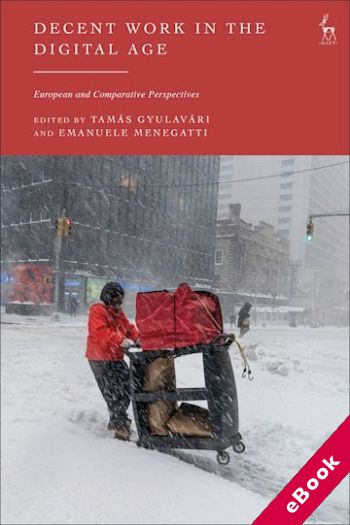
This book explores the legal and practical implications of the digital age for employment and industrial relations. To that end, the book analyses the problems arising from the digitalisation of work and the negative effects on working conditions in fields such as platform work, robotisation, discrimination, data protection, and freedom of speech. It also looks at how to ensure decent working conditions for workers affected by digitalisation, by investigating the minimum standards that should be ensured to mitigate negative effects – and how these could be best guaranteed by legislation and collective bargaining.
The book presents a theoretical framework on the impact of automatisation, robotics, and digitalisation on the very basic principles of individual and collective labour law. The chapters provide an in-depth analysis of new patterns of work prompted by digitalisation, including: classification of platform workers; recognition of employment and social security rights; competition law aspects of platform work; remote (tele)work arrangements; algorithmic decision-making and remote surveillance; data protection and privacy; and social media in working environments.
The book is an important reference for academics and researchers, social partners, and policy makers with an interest in labour law and industrial relations.










