
The eBooks we sell are sold as a single-user licence and are intended for the end user only.
The sale of some eBooks are restricted to certain countries. To alert you to such restrictions, please select the country of the billing address of your credit or debit card you wish to use for payment.
For further information see https://www.wildy.com/ebook-formats
Once the order is confirmed an e-mail will be sent to you to allow you to download the eBook. For UK purchases this will be automatic. For purchases outside the UK a member of staff will need to confirm the sale. (Staff are available to do this during normal business hours, Mon-Fri 8:30-17:00 UK time)
All eBooks are supplied firm sale and cannot be returned. If you believe there is a fault with your eBook then contact us on ebooks@wildy.com and we will help in resolving the issue. This does not affect your statutory rights.
“This is an excellent work. It is deeply researched, and the analysis of case law will prove very valuable to practitioners and academics seeking a synthesis of the law on an issue.” - The Rt. Hon. Lord Justice Green, Judge of the Court of Appeal of England and Wales and Chair of the Law Commission
“A valuable contribution to the jurisprudence on Article 1 Protocol No.1 and of much interest to both property and human rights lawyers.” - Professor Sarah Nield, University of Southampton
“The pervasiveness of A1P1 through contemporary property law makes this a serious and comprehensive study. This book masterfully interweaves theory and doctrinal law. It is both timely and necessary for academics and practitioners working in this area.” - David Sawtell, 39 Essex Chambers and Cambridge University
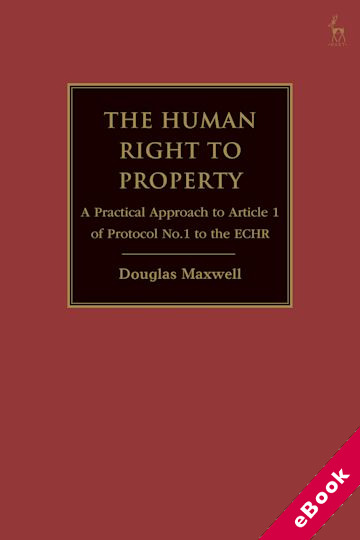
Through lively and rigorous commentary on the latest advances made by the European Court of Human Rights and domestic courts, The Human Right to Property enriches current understanding of the peaceful enjoyment of property since the enactment of the Human Rights Act 1998. Exploring the theoretical and political foundations of A1P1, the book guides the reader through the relevant case law from the earliest developments in Strasbourg to the present day. The Human Right to Property concludes that the most significant impacts of A1P1 are that it: forces States to justify interferences; limits radical redistributions of property; and casts a wider shadow over legislative choice and public body decision-making.











