
Wildy Logo
(020) 7242 5778
enquiries@wildy.com

Book of the Month

Cover of McMeel on the Construction of Contracts: Interpretation, Implication and Rectification

McMeel on the Construction of Contracts: Interpretation, Implication and Rectification

Price: £225.00

Land Registration Manual
4th ed


 Ash Jones


Welcome to Wildys

Watch


Judicial Cooperation in Commercial Litigation 3rd ed (The British Cross-Border Financial Centre World)


 Ian Kawaley, David Doyle, Shade Subair Williams


Offers for Newly Called Barristers & Students

Special Discounts for Newly Called & Students

Read More ...


Secondhand & Out of Print

Browse Secondhand Online

Read More...


2025-6 Christmas and New Year Closing

We are now closed for the Christmas and New Year period, returning on Monday 5th January 2026. Orders placed during this time will be processed upon our return on 5th January.

Hide this message

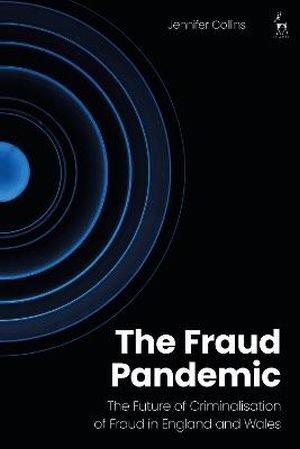
The Fraud Pandemic: The Future of Criminalisation of Fraud in England and Wales


ISBN13: 9781509962389
To be Published: March 2027
Publisher: Hart Publishing
Country of Publication: UK
Format: Hardback
Price: £90.00


This book provides the first in-depth scholarly analysis

    of fraud, the highest volume crime in England and Wales, addressing the challenges faced in building a principled criminal law response by presenting an innovative normative analysis.

    The UK is now in a pandemic of fraud. There were 4.6 million fraud offences recorded in the year ending March 2021, accounting for 42% of all crime committed against individuals. Fraud is now the highest volume crime in England and Wales; its incidence in the first half of 2021 was described by UK Finance as a 'national security threat'.

    The book provides the answers to key questions, such as:

    • How can the rapidly changing nature of fraud be understood and mapped by criminal lawyers?
    • How does fraud connect to economic crime more broadly?
    • Is the current landscape for criminalising fraud fit for purpose, in the light of changes to the nature and complexity of wrongdoing?
    • What are the principled limits to using Artificial Intelligence technologies to detect and to penalise fraud?
    • Which principles should inform fraud criminalisation and governance following the COVID-19 pandemic, to meet the challenges of a digital age and a stretched criminal justice system?

Subjects:
Criminal Law
Contents:
1. A Fraud Pandemic
2. The Meanings of 'Fraud'
3. The Changing Nature of Fraud
4. Theorising the Criminalisation of Fraud in England and Wales
5. Fraud in the Real World: Governing Fraud
6. Fraud's New Directions: The Ambivalence of AI
7. Epilogue: Fraud and the Limits of the Criminal Law








