
The eBooks we sell are sold as a single-user licence and are intended for the end user only.
The sale of some eBooks are restricted to certain countries. To alert you to such restrictions, please select the country of the billing address of your credit or debit card you wish to use for payment.
For further information see https://www.wildy.com/ebook-formats
Once the order is confirmed an e-mail will be sent to you to allow you to download the eBook. For UK purchases this will be automatic. For purchases outside the UK a member of staff will need to confirm the sale. (Staff are available to do this during normal business hours, Mon-Fri 8:30-17:00 UK time)
All eBooks are supplied firm sale and cannot be returned. If you believe there is a fault with your eBook then contact us on ebooks@wildy.com and we will help in resolving the issue. This does not affect your statutory rights.
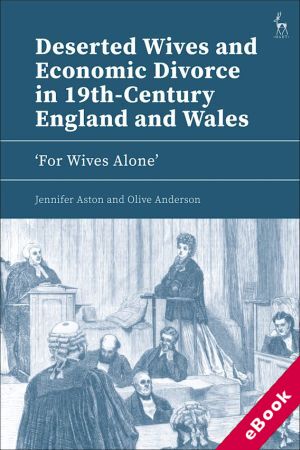
This book considers the Divorce and Matrimonial Causes Acts and their significant impact on previously invisible married women in the 19th Century.
Tens of thousands of women used little-known sections of the Acts to apply for orders from local magistrates' courts to reclaim their rights of testation, inheritance, property ownership, and (dependent on local franchise qualifications) ability to vote.
By examining the orders which were made and considering the women who applied for them, the book challenges the mistaken belief that Victorian England and Wales were nations of married, cohabiting couples with an extremely small population of divorcees.
The detailed statistical analysis and rich case studies provide a totally new perspective on the legal status and experiences of married women in England and Wales. Although many thousands of orders were granted between 1858 and 1900, their details remain unknown and unexamined, primarily because census records did not consistently record dissolved marriages and there is no central index of applications made.
Using sources including court records, parliamentary papers, newspaper reports, census returns, probate records and trade directories, this book reconstructs the successful – and unsuccessful – experiences of women applying to magistrates' courts to protect their assets across regions and decades.










