
The eBooks we sell are sold as a single-user licence and are intended for the end user only.
The sale of some eBooks are restricted to certain countries. To alert you to such restrictions, please select the country of the billing address of your credit or debit card you wish to use for payment.
For further information see https://www.wildy.com/ebook-formats
Once the order is confirmed an e-mail will be sent to you to allow you to download the eBook. For UK purchases this will be automatic. For purchases outside the UK a member of staff will need to confirm the sale. (Staff are available to do this during normal business hours, Mon-Fri 8:30-17:00 UK time)
All eBooks are supplied firm sale and cannot be returned. If you believe there is a fault with your eBook then contact us on ebooks@wildy.com and we will help in resolving the issue. This does not affect your statutory rights.
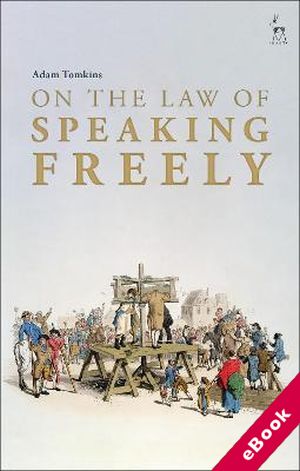
This book tackles the most pressing problems of contemporary free speech law by examining where the idea of free expression came from in the first place, applying the lessons of the past to address the challenges of the present.
Free speech cannot be taken for granted—it needs to be fought for. But its champions will be successful only if they understand what they are defending. For free speech is a deceptively simple principle.
How should it guide us on the bounds of what is acceptable to say? Should we be free to preach hatred, or to spread fear or fake news? Can media freedom be balanced against the right to privacy? How does free speech work online? Can the internet be made a safe space without compromising freedom of expression?
The book offers not just insights but answers to these and other such vital questions by roaming widely over the law of free speech, from English common law to the European Convention on Human Rights via the US First Amendment.
In rescuing free speech from the culture wars in which it has become embroiled, Adam Tomkins restates its values, its complexities, and its enduring importance, in prose that is as passionate as it is clear-sighted. Even-handed, informed and authoritative, this is a major, timely work from one of the UK’s leading constitutional scholars.










