The eBooks we sell are sold as a single-user licence and are intended for the end user only.
The sale of some eBooks are restricted to certain countries. To alert you to such restrictions, please select the country of the billing address of your credit or debit card you wish to use for payment.
For further information see https://www.wildy.com/ebook-formats
Once the order is confirmed an e-mail will be sent to you to allow you to download the eBook. For UK purchases this will be automatic. For purchases outside the UK a member of staff will need to confirm the sale. (Staff are available to do this during normal business hours, Mon-Fri 8:30-17:00 UK time)
All eBooks are supplied firm sale and cannot be returned. If you believe there is a fault with your eBook then contact us on ebooks@wildy.com and we will help in resolving the issue. This does not affect your statutory rights.
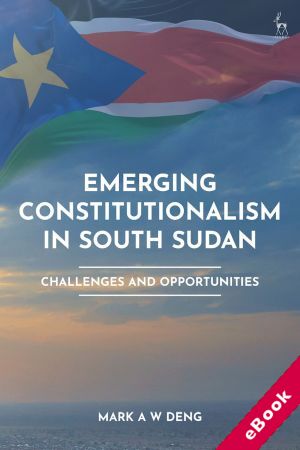
This book offers the first ever in-depth analysis of the emerging constitutionalism in South Sudan and the challenges it faces.
The book critically analyses the constitution-making processes that occurred in South Sudan between 2005 and 2011, finding, among other things, that there was a failure of constitutional discourse, particularly in relation to the 2011 drafting process of the Transitional Constitution.
It goes on to analyse how the constitution is being implemented. It finds that, despite the clear division of powers and functions between the national government and the sub-national governments, what has emerged in South Sudan in the post-constitution-making period is a form of coercive centralism where the national government controls much of the political decision-making process. This has had serious implications for democracy, constitutionalism, and the rule of law.
Finally, bearing in mind the failure in both how the Transitional Constitution was made and how it is being implemented, the book undertakes a critical analysis of the proposed process for drafting a new constitution for South Sudan. It identifies serious shortcomings and proposes how these could be addressed to enhance the process.