
The eBooks we sell are sold as a single-user licence and are intended for the end user only.
The sale of some eBooks are restricted to certain countries. To alert you to such restrictions, please select the country of the billing address of your credit or debit card you wish to use for payment.
For further information see https://www.wildy.com/ebook-formats
Once the order is confirmed an e-mail will be sent to you to allow you to download the eBook. For UK purchases this will be automatic. For purchases outside the UK a member of staff will need to confirm the sale. (Staff are available to do this during normal business hours, Mon-Fri 8:30-17:00 UK time)
All eBooks are supplied firm sale and cannot be returned. If you believe there is a fault with your eBook then contact us on ebooks@wildy.com and we will help in resolving the issue. This does not affect your statutory rights.
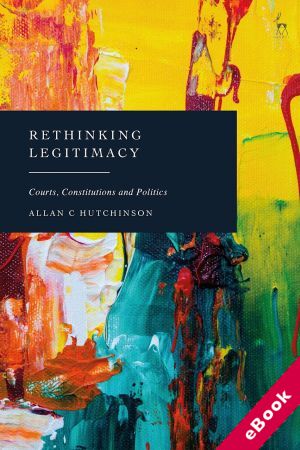
This book presents a new perspective on the debate around legitimacy, politics and constitutional law in Supreme Courts.
Moving away from the troubling perception that Supreme Courts are trampling on the wrong side of the law/politics divide, it accepts and defends the critical claim that constitutional law is intrinsically and inescapably politics: in style, substance and outcome.
It explains what is involved in that claim and recommends a more nuanced and compelling account than it is caricatured to be. The book proceeds to demonstrate how the legal and judicial process can proceed if the law-is-politics critique is taken seriously. Insisting that it cannot be business as usual, the author offers a series of constructive proposals about how constitutional law and judicial decision-making can continue in anything like their present format and style.
Recognising that a more radical approach could be taken about how democracy might re-organise, the book runs with the idea that it is possible to incorporate and accommodate the law-is-politics argument within a governmental system of constitutional democracy that resembles closely what now occurs. In that sense, the book is both critical and constructive as well as principled and pragmatic.










