The eBooks we sell are sold as a single-user licence and are intended for the end user only.
The sale of some eBooks are restricted to certain countries. To alert you to such restrictions, please select the country of the billing address of your credit or debit card you wish to use for payment.
For further information see https://www.wildy.com/ebook-formats
Once the order is confirmed an e-mail will be sent to you to allow you to download the eBook. For UK purchases this will be automatic. For purchases outside the UK a member of staff will need to confirm the sale. (Staff are available to do this during normal business hours, Mon-Fri 8:30-17:00 UK time)
All eBooks are supplied firm sale and cannot be returned. If you believe there is a fault with your eBook then contact us on ebooks@wildy.com and we will help in resolving the issue. This does not affect your statutory rights.
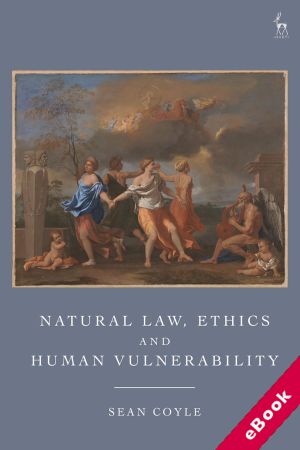
This book explores human vulnerability through the lens of natural law theory.
Beginning with a detailed examination of natural law ethics, centred upon the virtues (Part One), it sets out the relationship between natural law and human vulnerability. To be human is to be vulnerable; but vulnerability must itself be understood by reference to the human goods that are the central concern of natural law ethics. Such goods lie at the heart of what it means to lead a flourishing life, but they are in no way certain: goods such as health, education, the family can all be perverted or taken away by human agency or the vicissitudes of life.
Part Two poses the problem of how human beings and government can build resilience in the face of these vulnerabilities. Its main contention is that the central aims of vulnerability theory, including that of state responsiveness, are pre-figured in the social teachings of the Catholic Church.
These teachings provide a compelling basis for the demand that the state be more responsive to social scourges such as poverty, crime, debt and dependency. Vulnerability theorists will benefit from a new perspective on the problems that are central to their analysis; natural law theorists will profit by an enrichment and extension of their central concerns.