
The eBooks we sell are sold as a single-user licence and are intended for the end user only.
The sale of some eBooks are restricted to certain countries. To alert you to such restrictions, please select the country of the billing address of your credit or debit card you wish to use for payment.
For further information see https://www.wildy.com/ebook-formats
Once the order is confirmed an e-mail will be sent to you to allow you to download the eBook. For UK purchases this will be automatic. For purchases outside the UK a member of staff will need to confirm the sale. (Staff are available to do this during normal business hours, Mon-Fri 8:30-17:00 UK time)
All eBooks are supplied firm sale and cannot be returned. If you believe there is a fault with your eBook then contact us on ebooks@wildy.com and we will help in resolving the issue. This does not affect your statutory rights.
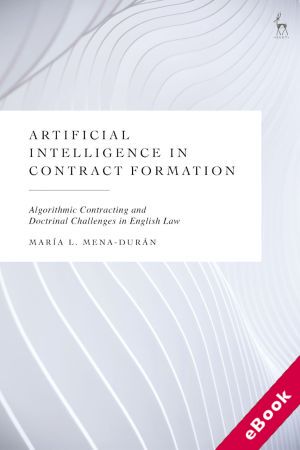
This book explores how artificial intelligence is reshaping the foundations of contract formation under English contract law.
As AI systems take on critical roles in forming agreements, traditional legal principles rooted in human decision-making are being challenged. The book introduces the concept of the "meeting of the algorithms" as a modern alternative to the conventional "meeting of the minds," emphasizing how AI-driven contracts differ from human-based ones.
Focusing on algorithmic contracting where both parties operate AI systems-particularly those based on machine learning-the book challenges the adequacy of traditional legal doctrines and terminology. It provides a structured analysis of the legal, conceptual, and doctrinal challenges raised by contracts formed without human intervention at the point of agreement.
The book proposes a new legal framework that accommodates algorithmic systems as communication and decision-making tools. It redefines consent, examines the attribution of knowledge and intention, and identifies the legal moment of formation in automated contracting environments. It shows how AI-driven contracting is forcing contract law to evolve without relying on fictional agency constructs or debates around legal personhood.
Artificial Intelligence in Contract Formation will appeal to researchers of contract law, technology law, and private law theory, as well as legal practitioners interested in AI governance and legal innovation. It contributes to ongoing debates on AI and law, and offers a roadmap for integrating algorithmic transactions into the mainstream of contract doctrine.










