The eBooks we sell are sold as a single-user licence and are intended for the end user only.
The sale of some eBooks are restricted to certain countries. To alert you to such restrictions, please select the country of the billing address of your credit or debit card you wish to use for payment.
For further information see https://www.wildy.com/ebook-formats
Once the order is confirmed an e-mail will be sent to you to allow you to download the eBook. For UK purchases this will be automatic. For purchases outside the UK a member of staff will need to confirm the sale. (Staff are available to do this during normal business hours, Mon-Fri 8:30-17:00 UK time)
All eBooks are supplied firm sale and cannot be returned. If you believe there is a fault with your eBook then contact us on ebooks@wildy.com and we will help in resolving the issue. This does not affect your statutory rights.
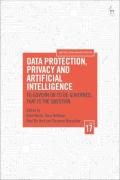
This book presents insights from the 2025 CPDP.ai international conference, where leading scholars, policy makers, and practitioners examine how Europe's fast-evolving digital frameworks shape global debates. As the EU legislates at unprecedented speed, it not only regulates technologies such as AI, but also defines their governance through rights-based instruments including the AI Act, the Data Act, and the GDPR.
The chapters analyse the consolidation of the EU model of AI and data governance, covering topics such as Fundamental Rights Impact Assessments, proportionality, transparency obligations for companion chatbots, and transatlantic contrasts in AI and health-data regulation. Contributors explore how divergent legal traditions influence accountability and democratic oversight, and how emerging duties-such as the duty of loyalty in data processing-could rebalance power between citizens and infrastructures. Other chapters address data access under the Data Act, empirical supervision of algorithmic profiling, and proposals to strengthen GDPR enforcement.
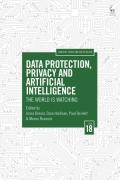
Opening with The World Is Watching, an artistic and philosophical reflection on perception, opacity, and the more-than-human in surveillance societies, the book bridges critical theory and regulatory practice. A dedicated Practitioners' Corner connects real-world governance experience with academic insight, highlighting pressing challenges for the year ahead.
Uniting law, technology, and ethics, this interdisciplinary volume captures Europe's effort to govern AI and data infrastructures-under the close gaze of a watching world.