Wildy Logo
(020) 7242 5778
enquiries@wildy.com

Book of the Month

Cover of Constitutional Agency

Constitutional Agency

Price: £105.00

Planning Law:
A Practitioner's
Handbook 2nd ed


 William Webster, Robert Weatherley


Welcome to Wildys

Watch


Corporate Insolvency Practice:
Litigation, Procedure
and Precedents 3rd ed


 Mark Watson-Gandy


Offers for Newly Called Barristers & Students

Special Discounts for Newly Called & Students

Read More ...


Secondhand & Out of Print

Browse Secondhand Online

Read More...


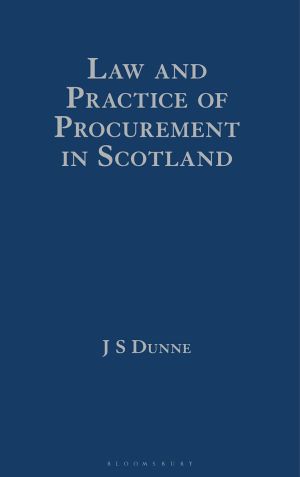
Law and Practice of Procurement in Scotland


ISBN13: 9781526532701
To be Published: December 2026
Publisher: Bloomsbury Professional
Country of Publication: UK
Format: Hardback
Price: £125.00


This text provides practical guidance on Scottish public procurement rules for practising lawyers and public procurement officers. The book examines the procurement process step-by-step from the point of identifying which rules apply to a given entity through to the award and modification of public contracts. Each chapter considers a different stage in that process and the particular rules and common issues and challenges that can arise at each stage.

There is now significant divergence between Scotland and the rest of the UK, for example:

  • The new Procurement Act 2023 will apply in England, Wales and Northern Ireland, but only in Scotland in respect of non-devolved procurement
  • There are separate Scottish procurement rules for 'below threshold' procurements covered in the Procurement Reform (Scotland) Act 2014 and the Procurement (Scotland) Regulations 2016
  • The existing EU-derived procurement rules will continue to apply in Scotland in respect of 'devolved procurement' (pertaining to the Scottish Government, local government, and government agencies, 'Scottish' utilities etc.)
  • In respect of devolved procurement law, the Scottish courts might be expected to take more account of EU court judgments, since the EU courts will be interpreting the language of the instruments from which devolved procurement law is derived. English courts will stop interpreting equivalent provisions (having moved on to the Act), we can expect Scottish courts to take progressively less account of English interpretation going forward when the Scottish Courts are applying devolved procurement rules
  • There are a number of distinctions between the English and Scottish regimes, in particular the application of 'general principles' and rules concerning procedures, but also different approaches to procedural requirements of initiating litigation
  • There will continue to be differential guidance and national policy statements

Subjects:
Scots Law
Contents:
1. Identifying the Applicable Rulebook
a. Identifying the Buyer
b. Contracting Authorities
c. Utilities
d. Subsidised Contracts
e. When Each Set of Regulations Applies – Public, Utilities, Concessions, Procurement Reform (Scotland) Act 2014 and Procurement Scotland Regulations 2016
f. Exempt Contracts
g. The Scottish Public Finance Manual, SPPNs and Other Guidance
h. Identifying the Type and Value of the Contract
i. The Procurement Principles

2. Identifying the Purchase
a. Contract Terms
b. Specifying the Requirement
c. Contract Value and Lots

3. Designing the Procurement
a. The Regulated Procurement Procedures
b. Prior Market Engagement, Prior Involvement and Conflicts of Interest
c. Selection and Qualification
d. Negotiations
e. Site Visits and Presentations

4. Direct Awards

5. Buying from Frameworks
a. Devolved Frameworks
b. Reserved Frameworks

6. Buying from Dynamic Purchasing Systems

7. Starting the Procurement Process
a. Drafting the ITT
b. Contract Notices
c. Preparing Evaluation Criteria
d. Price Evaluation Methodologies
e. Budgets and Pass/Fail Questions
f. Community Benefits
g. Fair Work Criteria
h. Environmental and Social Criteria
i. Price Adjustments

8. Running the Procurement Process
a. Clarifications
b. Moderation Meetings
c. Presentations
d. Late and Incomplete Submissions
e. Abnormally Low Bids
f. Conflicts of Interest
g. Negotiation

9. Awarding the Contract
a. Standstill Letters and Standstill Periods
b. Contract Award Letters
c. Award Notices
d. Post Tender Negotiations

10. Challenges to the Process
a. Automatic Suspension
b. Disclosure and Access to Documents
c. Manifestly Unreasonable Decisions

11. Modifying Existing Contracts