
The eBooks we sell are sold as a single-user licence and are intended for the end user only.
The sale of some eBooks are restricted to certain countries. To alert you to such restrictions, please select the country of the billing address of your credit or debit card you wish to use for payment.
For further information see https://www.wildy.com/ebook-formats
Once the order is confirmed an e-mail will be sent to you to allow you to download the eBook. For UK purchases this will be automatic. For purchases outside the UK a member of staff will need to confirm the sale. (Staff are available to do this during normal business hours, Mon-Fri 8:30-17:00 UK time)
All eBooks are supplied firm sale and cannot be returned. If you believe there is a fault with your eBook then contact us on ebooks@wildy.com and we will help in resolving the issue. This does not affect your statutory rights.
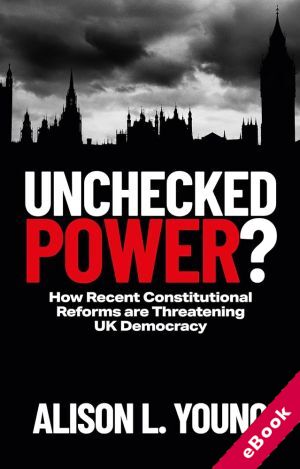
Is the government really acting for the people? Or does this rhetoric simply justify an executive power-grab?
For some, Boris Johnson’s premiership epitomised how far the UK’s democracy has been captured by populism and the Prime Minister seemed more concerned about fulfilling the wishes of the British people than with following the rules or listening to Parliament.
Events like ‘Partygate’ grabbed the headlines. Criticisms of Boris Johnson’s actions eventually led to his resignation and replacement as leader of his party and Prime Minister. Some feel that this shows that the UK’s constitution is healthy, with checks and balances in place to prevent any possible abuse of power.
While these events attracted much media attention, other constitutional changes have been taking place with little public awareness. These have strengthened governmental powers and weakened political and legal checks over governmental actions. Deliberation is being replaced by rhetoric and principles of good government no longer seem to restrain the actions of those in power.
Alison Young provides the first consolidated account of these changes, arguing that the UK is currently on a constitutional cliff-edge which endangers democracy and good constitutional government. She argues that more is needed to shore up the UK’s post-Brexit constitution to prevent it collapsing into a system of unchecked power.










