
Wildy Logo
(020) 7242 5778
enquiries@wildy.com

Book of the Month

Cover of 4 Stone Buildings on Liquidators

4 Stone Buildings on Liquidators

Edited by: Andrew de Mestre KC
Price: £289.00

Planning Law:
A Practitioner's
Handbook 2nd ed


 William Webster, Robert Weatherley


Welcome to Wildys

Watch


Corporate Insolvency Practice:
Litigation, Procedure
and Precedents 3rd ed


 Mark Watson-Gandy


Offers for Newly Called Barristers & Students

Special Discounts for Newly Called & Students

Read More ...


Secondhand & Out of Print

Browse Secondhand Online

Read More...


Email Problems

Our email services are slowly returning to normal and we will reply as and when they are received although some may still be delayed. If your enquiry is urgent you can still call the shop on (020) 7242 5778 (08.30-17:00).
Last updated 13/11/26 15:30 GMT
Hide this message

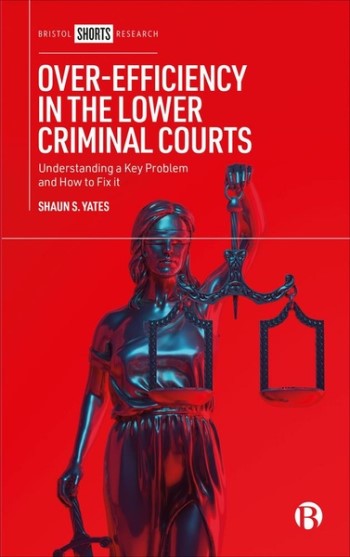
Over-Efficiency in the Lower Criminal Courts: Understanding a Key Problem and How to Fix it


ISBN13: 9781529236392
Published: June 2024
Publisher: Bristol University Press
Country of Publication: UK
Format: Hardback
Price: £45.00


In stock.


Also available as
£14.99

In our pursuit of efficiency in the lower criminal courts, have we lost sight of quality justice? Through the critical examination of original stenographic data, this book demonstrates how an English Magistrates' courthouse often pursued managerial efficiency to the detriment of social justice and procedural due process values.

Given that these courts process more than 95% of all criminal cases, this ‘over-efficiency’ problem has the capacity to cause significant social harm. Yates’ work concludes by providing socio-legal and criminological readers with ways to fix this over-efficiency problem. This accessible work is of value to policy makers and post-graduate students alike.


Subjects:
Criminal Law
Contents:
1. Introduction
2. The Modern History of Summary Justice Efficiency
3. Speed-Focused Managerialism
4. Standardised Defendant Processes
5. Court Users’ Procedural Adversity
6. Overcoming Over-Efficiency








