
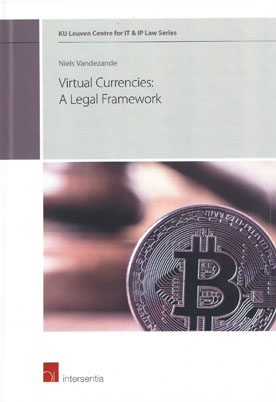
In the last few years, the cryptocurrency bitcoin has repeatedly made worldwide headlines with its fluctuations in value and the uncertainty regarding the legal framework under which it operates.
While bitcoin has swiftly become the foremost example of a virtual currency, it is by no means the only one. In-game currencies and currencies used as part of a loyalty scheme are examples as of other forms of virtual currencies. Moreover, new forms of virtual currency used mainly for investment purposes – derived from cryptocurrencies such as bitcoin – are rapidly gaining hold.
This book focuses on the legal aspects of virtual currencies from the perspective of financial and economic law. It establishes a typology of virtual currencies and assesses whether they can be considered as money. The author analyzes whether the EU legal frameworks on electronic money, payment services, anti-money laundering, and markets in financial instruments can be applied to virtual currencies.
A functional comparison is made to the US, where more regulatory initiative has been identified. The book concludes by answering the question of whether – and how – virtual currencies should be regulated within the EU.










