
The eBooks we sell are sold as a single-user licence and are intended for the end user only.
The sale of some eBooks are restricted to certain countries. To alert you to such restrictions, please select the country of the billing address of your credit or debit card you wish to use for payment.
For further information see https://www.wildy.com/ebook-formats
Once the order is confirmed an e-mail will be sent to you to allow you to download the eBook. For UK purchases this will be automatic. For purchases outside the UK a member of staff will need to confirm the sale. (Staff are available to do this during normal business hours, Mon-Fri 8:30-17:00 UK time)
All eBooks are supplied firm sale and cannot be returned. If you believe there is a fault with your eBook then contact us on ebooks@wildy.com and we will help in resolving the issue. This does not affect your statutory rights.
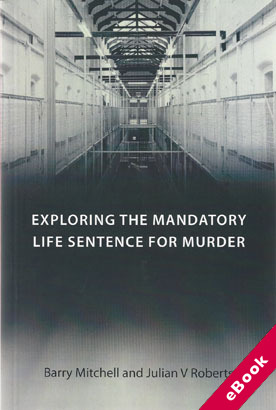
Murder is often regarded as both the “ultimate” and a unique crime, and whereas courts are normally given discretion in sentencing offenders, for murder the sentence is mandatory – indeterminate imprisonment.
Since the crime and the punishment come as a “package deal” this book looks at both the legal nature of the offence and at the current operation of the mandatory life sentence. Not only does the book adopt a critical approach, by assessing the strengths and weaknesses of the status quo, it also draws upon comparative material from both common and civil law jurisdictions in an attempt to provide a comprehensive exploration of these issues.
The need for public confidence in the criminal justice system is particularly acute in the way it deals with the most serious homicides.
In this book the authors report findings from the first systematic exploration of public attitudes to sentencing murder in this or any other common law jurisdiction. The picture of public opinion emerging from this recent large-scale nationwide qualitative and quantitative survey, funded by the Nuffield Foundation, is likely to surprise many, and will be of interest to all jurisdictions where the mandatory life sentence for murder has been questioned.










