
The eBooks we sell are sold as a single-user licence and are intended for the end user only.
The sale of some eBooks are restricted to certain countries. To alert you to such restrictions, please select the country of the billing address of your credit or debit card you wish to use for payment.
For further information see https://www.wildy.com/ebook-formats
Once the order is confirmed an e-mail will be sent to you to allow you to download the eBook. For UK purchases this will be automatic. For purchases outside the UK a member of staff will need to confirm the sale. (Staff are available to do this during normal business hours, Mon-Fri 8:30-17:00 UK time)
All eBooks are supplied firm sale and cannot be returned. If you believe there is a fault with your eBook then contact us on ebooks@wildy.com and we will help in resolving the issue. This does not affect your statutory rights.
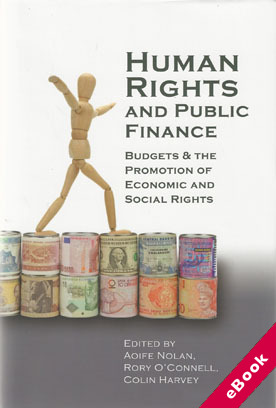
This edited collection addresses some of the most important challenges in contemporary human rights law and practice. Its central theme is the linkage between public finance, particularly budget decisions, and the realisation (or not) of economic and social rights. While much academic and political debate on economic and social rights implementation has focused on the role of the courts, this work places the spotlight squarely on those organs of government that have the primary responsibility and the greatest capacity for giving effect to such rights: namely, the elected branches of government.
The major actors considered in this book are politicians, public servants and civil society, with their role in realising economic and social rights the work's key focus. The book thus makes a crucial contribution to remedying the current imbalance in attention paid by economic and social rights scholars to the legislature and executive vis-à-vis the judiciary.
Featuring pioneering work by leading experts in the field of human rights and public finance, this multidisciplinary edited collection will be of great interest to academics, practitioners, students and public servants working in the areas of law, human rights, economics, development and political science.










