
The eBooks we sell are sold as a single-user licence and are intended for the end user only.
The sale of some eBooks are restricted to certain countries. To alert you to such restrictions, please select the country of the billing address of your credit or debit card you wish to use for payment.
For further information see https://www.wildy.com/ebook-formats
Once the order is confirmed an e-mail will be sent to you to allow you to download the eBook. For UK purchases this will be automatic. For purchases outside the UK a member of staff will need to confirm the sale. (Staff are available to do this during normal business hours, Mon-Fri 8:30-17:00 UK time)
All eBooks are supplied firm sale and cannot be returned. If you believe there is a fault with your eBook then contact us on ebooks@wildy.com and we will help in resolving the issue. This does not affect your statutory rights.
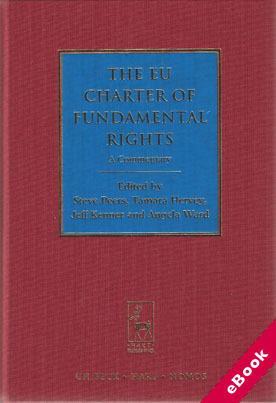
The Charter of Fundamental Rights of the European Union enshrines the key political, social and economic rights of EU citizens and residents in EU law.
In its present form it was approved in 2000 by the European Parliament, the Council of Ministers and the European Commission. However its legal status remained uncertain until the entry into force of the Treaty of Lisbon in December 2009. The Charter obliges the EU to act and legislate consistently with the Charter, and enables the EU's courts to strike down EU legislation which contravenes it.
The Charter applies to EU Member States when they are implementing EU law but does not extend the competences of the EU beyond the competences given to it in the treaties.
This Commentary on the Charter, the first in English, written by experts from several EU Member States, provides an authoritative but succinct statement of the how the Charter impacts upon EU, domestic and international law.
Following the conventional article-by-article approach, each Commentator offers an expert view of how each article is either already being interpreted in the courts, or is likely to be interpreted. Each commentary is referenced to the case law and is augmented with extensive references to further reading.
Six cross-cutting introductory chapters explain the Charter's institutional anchorage, its relationship to the Fundamental Rights Agency, its interaction with other parts of international human rights law, the enforcement mechanisms, extraterritorial scope, and the all-important 'Explanations'."











