
The eBooks we sell are sold as a single-user licence and are intended for the end user only.
The sale of some eBooks are restricted to certain countries. To alert you to such restrictions, please select the country of the billing address of your credit or debit card you wish to use for payment.
For further information see https://www.wildy.com/ebook-formats
Once the order is confirmed an e-mail will be sent to you to allow you to download the eBook. For UK purchases this will be automatic. For purchases outside the UK a member of staff will need to confirm the sale. (Staff are available to do this during normal business hours, Mon-Fri 8:30-17:00 UK time)
All eBooks are supplied firm sale and cannot be returned. If you believe there is a fault with your eBook then contact us on ebooks@wildy.com and we will help in resolving the issue. This does not affect your statutory rights.
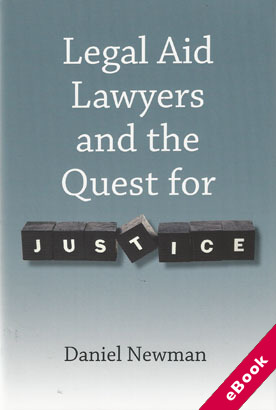
This book examines the state of access to criminal justice by considering the health of the lawyer-client relationship under legal aid. In the largest study of its kind for some two decades, ethnographic fieldwork is used to gain a fresh perspective upon the interaction that lies at the heart of the criminal justice system's equality of arms.
The research produces two contradictory messages; in interview, lawyers claim a positive relationship with their clients while, under participant observation, there emerges quite the opposite.
Paying more heed to what was seen than what was said, it is supposed that these lawyers were able to talk the talk but not walk the walk. The lawyers treat their clients with wanton disrespect; making fun of them, talking over them and pushing them to plead guilty – despite protestations to the contrary.
The evidence is damning for this branch of the legal profession – and tragic for the clients who depend on them. What is responsible for this malaise…inadequate financial remuneration? Increased time pressures? Lapsed ethical training? Whatever the origin, this book is intended to show the profession that there is a problem – one that could get worse unless they choose to learn from the mistakes made by the lawyers in this study.










