
The eBooks we sell are sold as a single-user licence and are intended for the end user only.
The sale of some eBooks are restricted to certain countries. To alert you to such restrictions, please select the country of the billing address of your credit or debit card you wish to use for payment.
For further information see https://www.wildy.com/ebook-formats
Once the order is confirmed an e-mail will be sent to you to allow you to download the eBook. For UK purchases this will be automatic. For purchases outside the UK a member of staff will need to confirm the sale. (Staff are available to do this during normal business hours, Mon-Fri 8:30-17:00 UK time)
All eBooks are supplied firm sale and cannot be returned. If you believe there is a fault with your eBook then contact us on ebooks@wildy.com and we will help in resolving the issue. This does not affect your statutory rights.
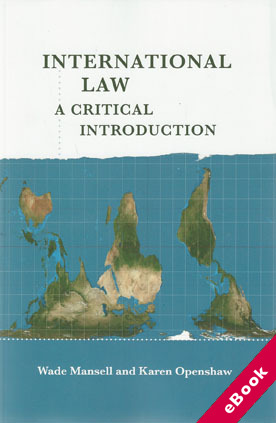
This book is intended to provide a significant and critical introduction to the concepts, principles and rules of international law through a consideration of contemporary international events.
It provides ways of considering the relevance of international law to particular disputes and also an appreciation of both the possibilities and limitations of legal method in international disputes. This in turn necessitates an examination of the relationship between international law and power.
Thus rather than studying international law as a system of rules that purports to govern, or at least constrain the international community, this book considers the actual effects of international law upon international disagreements.
Such an approach will be sceptical rather than cynical, intending to provide the means by which the role of international law may be evaluated. This necessitates discussion of the legal quality of international law; of the relationship between the academic disciplines of international law and international relations; of the apparent 'Eurocentricity' of international law; and of the relationship between political power and the ability to use or abuse (or ignore) international law.
Underlying the book is the assertion that international law is political in content (in the sense of being concerned with the exercise of power) but that it draws much of its effectiveness from its self-portrayal as being apolitical, or at least politically neutral.











