
The eBooks we sell are sold as a single-user licence and are intended for the end user only.
The sale of some eBooks are restricted to certain countries. To alert you to such restrictions, please select the country of the billing address of your credit or debit card you wish to use for payment.
For further information see https://www.wildy.com/ebook-formats
Once the order is confirmed an e-mail will be sent to you to allow you to download the eBook. For UK purchases this will be automatic. For purchases outside the UK a member of staff will need to confirm the sale. (Staff are available to do this during normal business hours, Mon-Fri 8:30-17:00 UK time)
All eBooks are supplied firm sale and cannot be returned. If you believe there is a fault with your eBook then contact us on ebooks@wildy.com and we will help in resolving the issue. This does not affect your statutory rights.
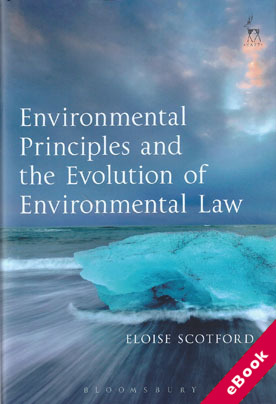
Environmental principles proliferate in domestic international legal and policy discourse - from the polluter pays and precautionary principles to the principles of integration and sustainability - reflecting key goals of environmental protection and sustainable development on which there is apparent political consensus.
Environmental principles also have a high profile in environmental law, beyond their popularity as policy and political concepts, as ideas that might unify the subject and provide it with conceptual foundations or boost its delivery of environmental outcomes.
However, environmental principles are elusive concepts in environmental law - their meanings and legal functions are ambiguous, and they have varying histories in different jurisdictions. This book aims to deepen the legal understanding of environmental principles in light of recent legal developments. To this end, it analyses closely the increasing legal effects of environmental principles in different jurisdictions to demonstrate how they are in fact shaping and revealing innovative bodies of environmental law.
This analysis is a step forward in understanding a key feature of modern environmental law, as well as being a contribution to environmental policy debates and discussions internationally that rely heavily on environmental principles, including their supposed legal effects.










