
The eBooks we sell are sold as a single-user licence and are intended for the end user only.
The sale of some eBooks are restricted to certain countries. To alert you to such restrictions, please select the country of the billing address of your credit or debit card you wish to use for payment.
For further information see https://www.wildy.com/ebook-formats
Once the order is confirmed an e-mail will be sent to you to allow you to download the eBook. For UK purchases this will be automatic. For purchases outside the UK a member of staff will need to confirm the sale. (Staff are available to do this during normal business hours, Mon-Fri 8:30-17:00 UK time)
All eBooks are supplied firm sale and cannot be returned. If you believe there is a fault with your eBook then contact us on ebooks@wildy.com and we will help in resolving the issue. This does not affect your statutory rights.
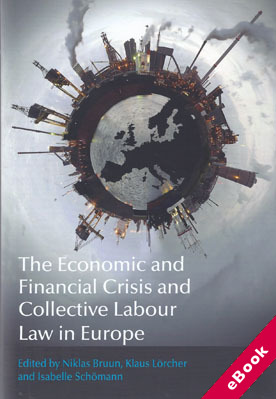
The current economic and financial crisis erupted several years ago. Its effects impact deeply upon society, in which legal rules and social patterns have developed to enable the establishment of civilisation, justice and peace.
Over time it has become more and more obvious that policy, financial and economic actors have adopted austerity measures as a main tool to solve the ensuing problems, and that these measures have hit social policy standards sometimes dramatically.
Recent analyses have dealt with several aspects of this issue. This book focuses on one important element: the impact on collective labour law. It seeks to add to the debate by presenting mainly legal arguments derived from different sources and backgrounds, examining the EU and 'Troika' measures, the economic and political background, and the sometimes dramatic consequences of austerity measures on democracy, collective bargaining and the right to strike.
Against the framework of EU law, the relevant ILO Conventions, (Revised) European Social Charter and European Convention on Human Rights provisions the non-compliance of these measures is analysed and demonstrated. The book is also dedicated to procedural questions, and in particular how legal approaches may be used to challenge austerity measures.










