
The eBooks we sell are sold as a single-user licence and are intended for the end user only.
The sale of some eBooks are restricted to certain countries. To alert you to such restrictions, please select the country of the billing address of your credit or debit card you wish to use for payment.
For further information see https://www.wildy.com/ebook-formats
Once the order is confirmed an e-mail will be sent to you to allow you to download the eBook. For UK purchases this will be automatic. For purchases outside the UK a member of staff will need to confirm the sale. (Staff are available to do this during normal business hours, Mon-Fri 8:30-17:00 UK time)
All eBooks are supplied firm sale and cannot be returned. If you believe there is a fault with your eBook then contact us on ebooks@wildy.com and we will help in resolving the issue. This does not affect your statutory rights.
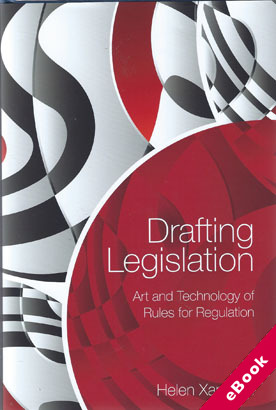
This book constitutes the first thorough academic analysis of legislative drafting. By placing the study of legislation and its principles within the paradigm of Flyberg's phronetic social sciences, it offers a novel approach which breaks the tradition of unimaginative past descriptive reiterations of drafting conventions.
Instead of prescribing rules for legislation, it sets out to identify efficacy as the main aim of the actors in the policy, legislative and drafting processes, and effectiveness as the main goal in the drafting of legislation. Through the prism of effectiveness as synonymous with legislative quality, the book explores the stages of the drafting process; guides the reader through structure and sections in their logical sequence, and introduces rules for drafting preliminary, substantive and final provisions.
Special provisions, comparative legislative drafting and training for drafters complete this thorough analysis of the drafting of legislation as a tool for regulation. Instead of teaching the reader which drafting rules prevail, the book explores the reasons why drafting rules have come about, thus encouraging readers to understand what is pursued by each rule and how each rule applies.
The book is aimed at academics and practitioners who draft or use statutory law in the common or civil law traditions.










