
The eBooks we sell are sold as a single-user licence and are intended for the end user only.
The sale of some eBooks are restricted to certain countries. To alert you to such restrictions, please select the country of the billing address of your credit or debit card you wish to use for payment.
For further information see https://www.wildy.com/ebook-formats
Once the order is confirmed an e-mail will be sent to you to allow you to download the eBook. For UK purchases this will be automatic. For purchases outside the UK a member of staff will need to confirm the sale. (Staff are available to do this during normal business hours, Mon-Fri 8:30-17:00 UK time)
All eBooks are supplied firm sale and cannot be returned. If you believe there is a fault with your eBook then contact us on ebooks@wildy.com and we will help in resolving the issue. This does not affect your statutory rights.
The collapse of the Rana Plaza in Bangladesh (2013) is one of many cases to invoke critical scrutiny and moral outrage regarding the conditions under which consumer goods sold on our markets are produced elsewhere.
In spite of abiding moral concerns, these goods remain popular and consumers continue to buy them. Such transactionsfor goods made under deplorable production conditions are usually presumed to count as ‘normal’ market transactions, i.e. transactions that are recognized as valid consumer-contracts under the rules of contract law.
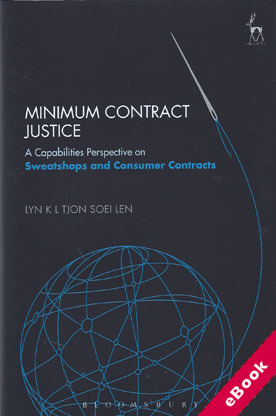
Minimum Contract Justice challenges this presumption of normality. It explores the question of how theories of justice bear on such consumer contracts; how should a society treat a transaction for a good made under deplorable conditions elsewhere?
Minimum Contract Justice defends the position that a society that strives to be minimally just should not lend its power to enforce, support, or encourage transactions that are incompatible with the ability of others elsewhere to live decent human lives.
As such, the book introduces a new perspective on the legal debate concerning deplorable production conditions that has settled around ideas of corporate responsibility, and the pursuit of international labour rights.










