
The eBooks we sell are sold as a single-user licence and are intended for the end user only.
The sale of some eBooks are restricted to certain countries. To alert you to such restrictions, please select the country of the billing address of your credit or debit card you wish to use for payment.
For further information see https://www.wildy.com/ebook-formats
Once the order is confirmed an e-mail will be sent to you to allow you to download the eBook. For UK purchases this will be automatic. For purchases outside the UK a member of staff will need to confirm the sale. (Staff are available to do this during normal business hours, Mon-Fri 8:30-17:00 UK time)
All eBooks are supplied firm sale and cannot be returned. If you believe there is a fault with your eBook then contact us on ebooks@wildy.com and we will help in resolving the issue. This does not affect your statutory rights.
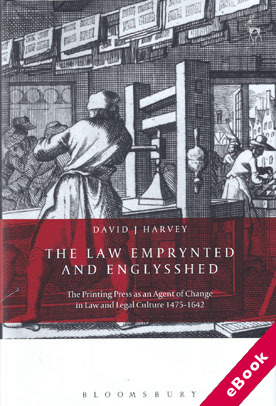
What impact did the printing press – a new means of communicating the written word – have on early modern English lawyers? This book examines the way in which law printing developed in the period from 1475 up until 1642 and the start of the English Civil War.
It offers a new perspective on the purposes and structures of the regulation of the printing press and considers how and why lawyers used the new technology. It examines the way in which lawyers adapted to the use of printed works and the way in which the new technology increased the availability of texts and books for lawyers and the administrative community. It also considers the wider humanist context within which law printing developed.
The story is set against the backdrop of revolutionary changes in English society and the move not only to print the law, but also increase its accessibility by making information available in English. The book will be of interest to lawyers and legal historians, print and book historians and the general reader.










