
The eBooks we sell are sold as a single-user licence and are intended for the end user only.
The sale of some eBooks are restricted to certain countries. To alert you to such restrictions, please select the country of the billing address of your credit or debit card you wish to use for payment.
For further information see https://www.wildy.com/ebook-formats
Once the order is confirmed an e-mail will be sent to you to allow you to download the eBook. For UK purchases this will be automatic. For purchases outside the UK a member of staff will need to confirm the sale. (Staff are available to do this during normal business hours, Mon-Fri 8:30-17:00 UK time)
All eBooks are supplied firm sale and cannot be returned. If you believe there is a fault with your eBook then contact us on ebooks@wildy.com and we will help in resolving the issue. This does not affect your statutory rights.
Ultra-wealthy families have incorporated private trust companies into their wealth structures with increasing frequency over recent decades. Private trust companies can offer greater control over the administration of the family’s trusts and can provide greater flexibility in the management of the trust’s assets. For many families, a private trust company is a natural complement to the family office, enabling it to include fiduciary services among the services that it provides to its members. Reflecting the rising popularity of private trust companies, more jurisdictions have enacted legislation allowing them.
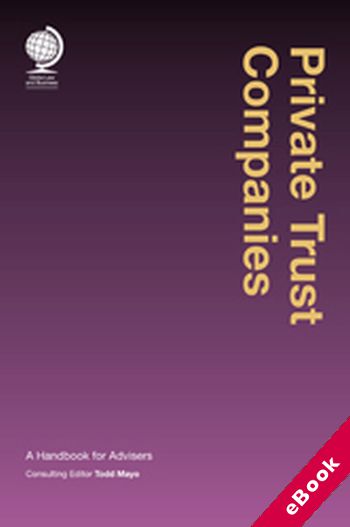
This handbook is a comprehensive resource for lawyers, accountants, family office executives and any others who advise ultra-wealthy families on private trust companies. Featuring chapters written by leading practitioners, it fully explores the legal, regulatory and practical dimensions of forming and operating a private trust company.
A series of chapters examines the relevant law in prime jurisdictions including Bermuda, the Cayman Islands, Hong Kong, Jersey and key US states. Other chapters focus on organisational and operational issues, such as designing a private trust company’s ownership structure, implementing proper internal controls, outsourcing services, working with professional advisers, managing trust investments and managing inter-jurisdictional activities. Important matters like coordinating with the family office, communicating with family, protecting privacy and handling disputes involving private trust companies are also covered.
Contributors include practitioners from Appleby, Bedell Christin, Carey Olsen, Cadwalader, Day Pitney, Holland & Knight, McDermott Will & Emery, Meritus Trust Company, Saffery Champness, South Dakota Trust Company, Squire Patton Boggs, Walkers, Wickersham & Taft and Withers.











