
The eBooks we sell are sold as a single-user licence and are intended for the end user only.
The sale of some eBooks are restricted to certain countries. To alert you to such restrictions, please select the country of the billing address of your credit or debit card you wish to use for payment.
For further information see https://www.wildy.com/ebook-formats
Once the order is confirmed an e-mail will be sent to you to allow you to download the eBook. For UK purchases this will be automatic. For purchases outside the UK a member of staff will need to confirm the sale. (Staff are available to do this during normal business hours, Mon-Fri 8:30-17:00 UK time)
All eBooks are supplied firm sale and cannot be returned. If you believe there is a fault with your eBook then contact us on ebooks@wildy.com and we will help in resolving the issue. This does not affect your statutory rights.
Despite a temporary decline in energy usage and emissions resulting from the confinement policies adopted by many states in response to the Covid-19 pandemic, the world is not on track to meet the Paris Agreement climate change goals. In order to bridge the 'emissions gap' by 2030, the energy industry is critical to achieving the necessary cuts to emissions, however, it must also balance increasing energy demand with the need to achieve sustainability of energy supply for future generations. This requires the industry to transition from dependence on fossil-fuel sources and look to new technologies that underpin a low-carbon economy. Renewables are central to this transition.
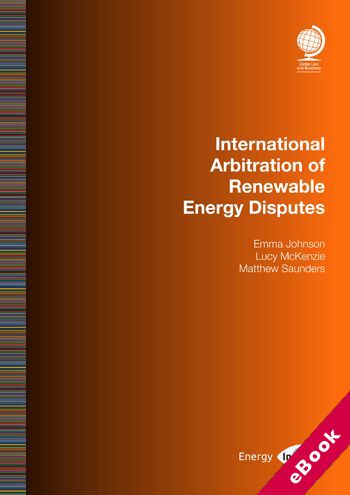
The increase in renewable energy capacity globally and the complex and relatively untested nature of renewables projects and the contracts underlying them give rise to a wide range of potential disputes. International arbitration has long been the preferred dispute resolution forum for the energy sector and is well placed to be the leading process for resolving the many and varied disputes that can arise in the lifetime of a renewables project.
In light of the increased prevalence of renewables disputes, this Special Report considers:
Written for both a legal and non-legal audience, this Special Report is relevant to those interested in learning about the scope for disputes in the renewables sector, how they can be avoided, and how arbitration can best be deployed to prevent delay and help push the energy transition forward.










