
The eBooks we sell are sold as a single-user licence and are intended for the end user only.
The sale of some eBooks are restricted to certain countries. To alert you to such restrictions, please select the country of the billing address of your credit or debit card you wish to use for payment.
For further information see https://www.wildy.com/ebook-formats
Once the order is confirmed an e-mail will be sent to you to allow you to download the eBook. For UK purchases this will be automatic. For purchases outside the UK a member of staff will need to confirm the sale. (Staff are available to do this during normal business hours, Mon-Fri 8:30-17:00 UK time)
All eBooks are supplied firm sale and cannot be returned. If you believe there is a fault with your eBook then contact us on ebooks@wildy.com and we will help in resolving the issue. This does not affect your statutory rights.
Like so many other professions, law is becoming increasingly influenced by an overwhelming amount of disparate, fragmented and complex data that can both help and hinder business. Data comes from a wealth of different sources, both internal and external, constantly changing, never still. Keeping control of all that data is one challenge; leveraging it to the greater good much harder.
Despite the huge amount of data in the average law firm, data-driven decision-making is relatively new and uncharted. With the hugely disruptive changes that have occurred in our ways of working over the last two years, the issue of data is now front and centre.
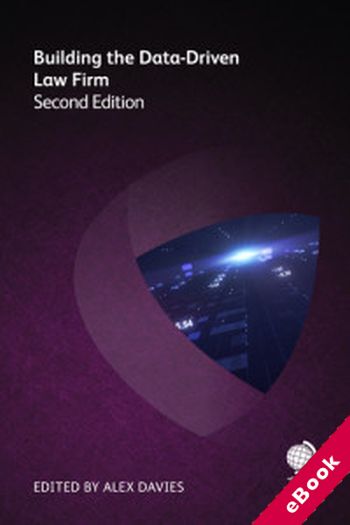
This second edition of Building the Data-Driven Law Firm looks at how the use of data has become inextricably linked with the practice of law; how it can be utilized to the good, and the safeguards that must be put in place to mitigate the bad; how Big Data will revolutionize the way lawyers work, and the cases they will work on; and how new uses for data (including blockchain and the Internet of Things) will influence the law firm of the future. Bringing the book bang up to date, new content features how we can keep data secure in the changing world of work, how data can be used for business development and client satisfaction, the implications of data bias and data theft, and whether the way we use data is even useful anymore.










