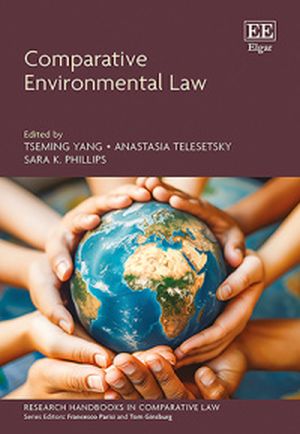
Discussing the law in theory and in practice, Comparative Environmental Law identifies the ways in which regulatory systems converge or diverge, examining key developments in international legal frameworks from every continent.
Expert contributors review different comparative approaches and examine how these can be applied to the study of environmental law. They outline environmental impact assessments at project level and explore the importance of information disclosure in pollution management. Chapters also present insights into environmental human rights policies, covering compliance and enforcement, as well as biodiversity and water laws across the Americas and Europe. The handbook provides forward-thinking analyses of emerging areas, such as renewable energy and the impact of environmental policies on Indigenous communities, and presents an expansive overview of current environmental issues, including land contaminations, mining regulations and food waste.
An essential resource for legal scholars and researchers, this handbook is also useful for students of environmental management and government officials involved in law-making and international development.