
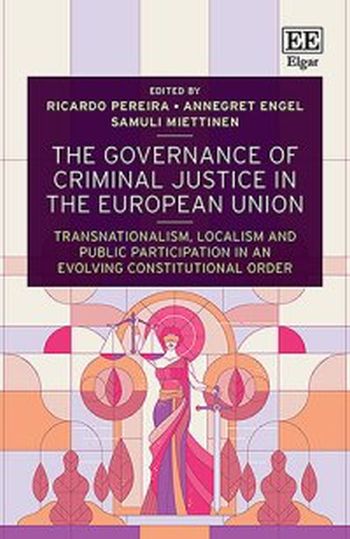
This timely book provides an astute assessment of the institutional and constitutional boundaries, interactions and tensions between the different levels of governance in EU criminal justice. Probing the conceptual and theoretical underpinnings of the EU’s approach to transnational crime, it proposes improved mechanisms for public participation in the governance of EU criminal law, designed to ensure better transparency, accountability and democratic controls.
Influential scholars from across Europe analyse key practical challenges to the governance of EU criminal law in the context of specific crimes, including financial crime, cybercrime and environmental crime. Offering sector-specific perspectives on tackling transnational crime, insightful chapters examine the potential options for criminal-law cooperation between the EU and the UK after Brexit, and consider to what extent these avenues may represent enhanced mechanisms for the governance of transnational crimes and common security threats in the future.
This important study will prove crucial reading for academics, researchers and postgraduate students examining EU, transnational and comparative criminal law, as well as European integration studies and constitutional law more broadly. Practitioners and policy-makers working in the EU’s Area of Freedom, Security and Justice will also benefit from this book’s practical insights into the mechanisms of EU law and justice.










