
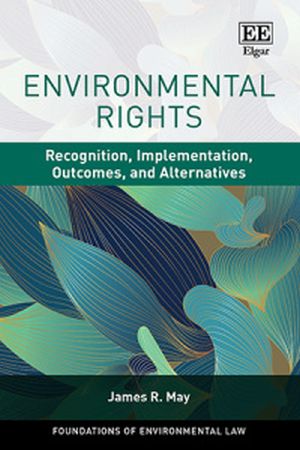
This book provides a comprehensive and compelling examination of the emergence of environmental rights in laws, constitutions and court rulings worldwide. Drawing on empirical research and data-driven analysis, James R. May engages the opportunities and challenges in translating the global recognition of environmental rights into functional and practical improvements in environmental outcomes.
May explores both the hope that environmental rights provide for improving outcomes for environmental quality, climate change, and the human condition and how judicial reluctance, textual ambiguity, lack of standards and socio-political barriers can thwart implementation of the right to a healthy environment even when written into law at international, regional and national levels. May explains the growing significance of alternative legal channels for achieving the aims of environmental rights, including socioeconomic rights, such as the rights to life, dignity, health, Nature, participation and sustainability, and subnational constitutions, to promote alternative legal frameworks for environmental protection when explicit environmental rights are absent, overlooked or unenforceable.
Environmental Rights is essential reading for scholars and students of environmental, comparative and human rights law, seeking to understand the legal architecture and implementation challenges of international environmental rights. It also provides valuable frameworks for practitioners and policymakers in advocacy, the judiciary and interdisciplinary fields concerned with sustainability and justice.










