
The eBooks we sell are sold as a single-user licence and are intended for the end user only.
The sale of some eBooks are restricted to certain countries. To alert you to such restrictions, please select the country of the billing address of your credit or debit card you wish to use for payment.
For further information see https://www.wildy.com/ebook-formats
Once the order is confirmed an e-mail will be sent to you to allow you to download the eBook. For UK purchases this will be automatic. For purchases outside the UK a member of staff will need to confirm the sale. (Staff are available to do this during normal business hours, Mon-Fri 8:30-17:00 UK time)
All eBooks are supplied firm sale and cannot be returned. If you believe there is a fault with your eBook then contact us on ebooks@wildy.com and we will help in resolving the issue. This does not affect your statutory rights.
Both Czech and Hungarian trusts celebrate their 10th anniversary in 2024. These modern structures were introduced in response to the limitations of earlier succession-planning mechanisms and, together with other legal instruments, provided new tools for wealth management, estate planning and asset protection, which have reshaped the estate-planning environment.
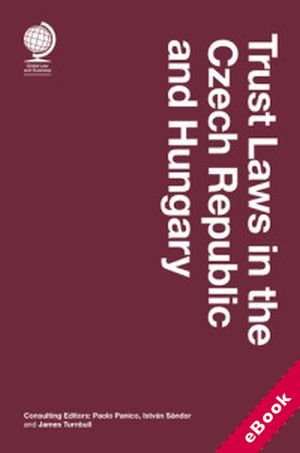
Trust Laws in the Czech Republic and Hungary explores the issues and challenges encountered when introducing common law trust concepts into civil law legal systems. It also reviews the legal and practical aspects of trusts in these two – quite different – jurisdictions, and the book is divided into two parts which deal separately with Czech and Hungarian solutions.
Authored by well-known experts in this field, chapters cover the basics of the structures, providing a broad overview of key points including:
This title provides the only systematic review of Czech and Hungarian trust laws in English. It is an invaluable reference work to help lawyers and other private client advisers structure their clients' wealth. Additionally, professional trustees involved in the administration of Czech and Hungarian trusts, as well as accountants and tax advisers dealing with the tax treatment of trusts in the CEE region, will find this to be an indispensable guide.










