
The eBooks we sell are sold as a single-user licence and are intended for the end user only.
The sale of some eBooks are restricted to certain countries. To alert you to such restrictions, please select the country of the billing address of your credit or debit card you wish to use for payment.
For further information see https://www.wildy.com/ebook-formats
Once the order is confirmed an e-mail will be sent to you to allow you to download the eBook. For UK purchases this will be automatic. For purchases outside the UK a member of staff will need to confirm the sale. (Staff are available to do this during normal business hours, Mon-Fri 8:30-17:00 UK time)
All eBooks are supplied firm sale and cannot be returned. If you believe there is a fault with your eBook then contact us on ebooks@wildy.com and we will help in resolving the issue. This does not affect your statutory rights.
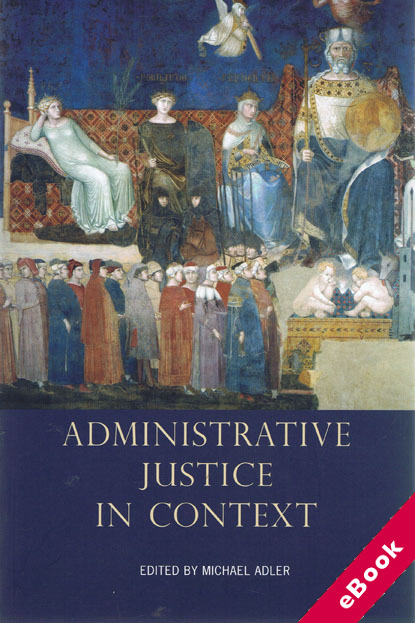
This book comprises a definitive collection of papers on administrative justice, written by a set of very distinguished contributors. It is divided into five parts, each of which contains articles on a particular aspect of administrative justice.
The first part deals with the impact of ‘contextual changes’ on administrative justice and considers the implications of changes in governance and public administration, management and service delivery, information technology, audit and accounting, and human rights for administrative justice.
The second part deals with conceptual issues and describes a number of competing approaches to the administrative justice. The third part deals with the application of administrative justice principles to private law disputes while the fourth part deals with the distinctive characteristics of administrative justice in three other jurisdictions.
The final part deals with current developments in administrative justice and the book concludes with a discussion of legislative and policy developments in the UK.
The general approach of the book is socio-legal and interdisciplinary. The chapters adopt a variety of disciplinary perspectives, including those derived from political science, public policy, social policy, accounting and information technology as well as from law. Although most of the contributors are academics, some are practitioners.
For these reasons, the book should be of interest to lawyers, particularly those with interests in administrative law, and to social scientists, particularly those with interests in public administration, public policy and public management.










