
The eBooks we sell are sold as a single-user licence and are intended for the end user only.
The sale of some eBooks are restricted to certain countries. To alert you to such restrictions, please select the country of the billing address of your credit or debit card you wish to use for payment.
For further information see https://www.wildy.com/ebook-formats
Once the order is confirmed an e-mail will be sent to you to allow you to download the eBook. For UK purchases this will be automatic. For purchases outside the UK a member of staff will need to confirm the sale. (Staff are available to do this during normal business hours, Mon-Fri 8:30-17:00 UK time)
All eBooks are supplied firm sale and cannot be returned. If you believe there is a fault with your eBook then contact us on ebooks@wildy.com and we will help in resolving the issue. This does not affect your statutory rights.
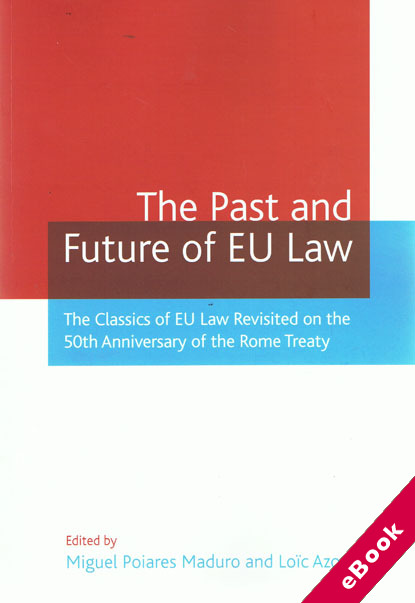
This revisits, in a new light, some of the classic cases which constitute the foundations of the EU legal order and is timed to celebrate the 50th anniversary of the Rome Treaty establishing a European Economic Community.
Its broader purpose, however, is to discuss the future of the EU legal order by examining, from a variety of different perspectives, the most important judgments of the ECJ which established the foundations of the EU legal order.
The tone is neither necessarily celebratory nor critical, but relies on the viewpoint of the distinguished line-up of contributors - drawn from among former and current members of the Court (the view from within), scholars from other disciplines or lawyers from other legal orders (the view from outside), and two different generations of EU legal scholars (the classics revisit the classics and a view from the future). Each of these groups will provide a different perspective on the same set of selected judgments.
In each short essay, questions such as 'what would have EU law been without this judgment of the Court? what factors might have influenced it?; did the judgment create expectations which were not fully fulfilled?' and so on, are posed and answered. The result is a profound, wide-ranging and fresh examination of the 'founding cases' of EU law.










