
The eBooks we sell are sold as a single-user licence and are intended for the end user only.
The sale of some eBooks are restricted to certain countries. To alert you to such restrictions, please select the country of the billing address of your credit or debit card you wish to use for payment.
For further information see https://www.wildy.com/ebook-formats
Once the order is confirmed an e-mail will be sent to you to allow you to download the eBook. For UK purchases this will be automatic. For purchases outside the UK a member of staff will need to confirm the sale. (Staff are available to do this during normal business hours, Mon-Fri 8:30-17:00 UK time)
All eBooks are supplied firm sale and cannot be returned. If you believe there is a fault with your eBook then contact us on ebooks@wildy.com and we will help in resolving the issue. This does not affect your statutory rights.
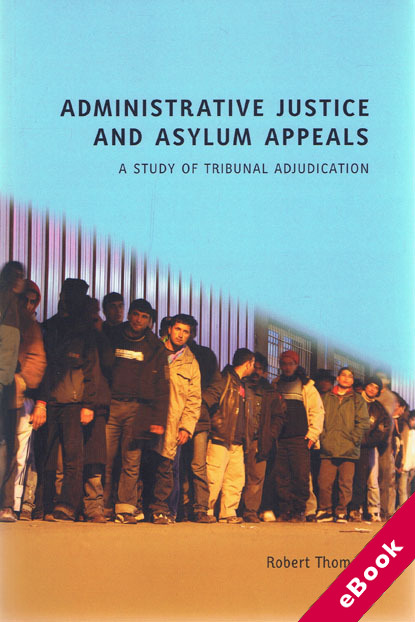
How are we to assess and evaluate the quality of the tribunal systems that do the day-to-day work of adjudicating upon the disputes individuals have with government? This book examines how the idea of adjudicative quality works in practice by presenting a detailed case-study of the tribunal system responsible for determining appeals lodged by foreign nationals who claim that they will be at risk of persecution or ill-treatment on return to their country of origin.
Over recent years, the asylum appeal process has become a major area of judicial decision-making and the most frequently restructured tribunal system. Asylum adjudication is also one of the most difficult areas of decision-making in the modern legal system.
Integrating empirical research with legal analysis, this book provides an in-depth study of the development and operation of this tribunal system and of asylum decision-making. The book examines how this particular appeal process seeks to mediate the tension between the competing values under which it operates. There are chapters examining the organisation of the tribunal system, its procedures, the nature of fact-finding in asylum cases and the operation of onward rights of challenge.
An examination as to how the tensions inherent in the idea of administrative justice are manifested in the context of a tribunal system responsible for making potentially life or death decisions, this book fills a gap in the literature and will be of value to those interested in administrative law and asylum adjudication.











