
The eBooks we sell are sold as a single-user licence and are intended for the end user only.
The sale of some eBooks are restricted to certain countries. To alert you to such restrictions, please select the country of the billing address of your credit or debit card you wish to use for payment.
For further information see https://www.wildy.com/ebook-formats
Once the order is confirmed an e-mail will be sent to you to allow you to download the eBook. For UK purchases this will be automatic. For purchases outside the UK a member of staff will need to confirm the sale. (Staff are available to do this during normal business hours, Mon-Fri 8:30-17:00 UK time)
All eBooks are supplied firm sale and cannot be returned. If you believe there is a fault with your eBook then contact us on ebooks@wildy.com and we will help in resolving the issue. This does not affect your statutory rights.
Wildy's Book of the Month - July 2010
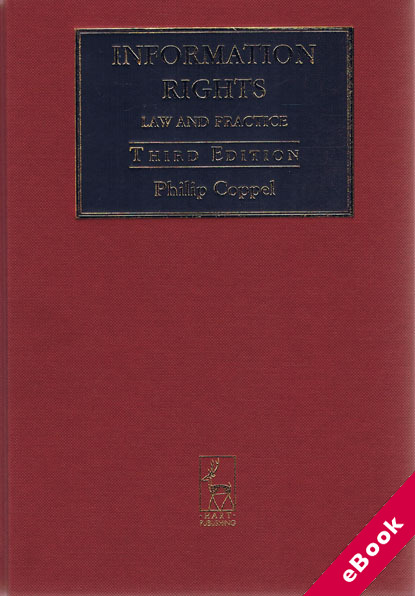
This is the third edition of the leading practitioner's work on freedom of information. Designed to provide in-depth legal analysis and practical guidance, this book has become the first port of call for anyone either seeking or handling requests for official information. The latest edition maintains its authorship of expert lawyers.The two years since the previous edition of this book (publshed by Sweet & Maxwell) have seen numerous important decisions from the courts and from the Information Tribunal on freedom of information law. The learning from all these has been incorporated into this new edition, enabling a practitioner to see immediately all relevant cases and the principles that emerge from them.
The book is logically organised so the practitioner can quickly find the topic of choice. The work commences with an historical analysis that sets out the object of the legislation and its relationship with other aspects of public law, with full references to Hansard and other Parliamentary materials provided. This is followed by a summary of the regime in five comparative jurisdictions, providing a useful testbed for anticipated effects of discloure and a normative yardstick.
The impact of the Human Rights Act 1998 is given separate consideration. Next follows a series of chapters dealing with rights of access under provisions apart from the FOI Act: access to information held by EU bodies; access to information under the Data Protection Act; access to information under the Environmental Information Regulations; public records; and access under numerous other provisions in legislation.
Together, these provide the practitioner with sources of access that might otherwise be overlooked. All are arranged thematically. Throughout the book, full web references are given (including to all cases), facilitating ready access to primary material.










