
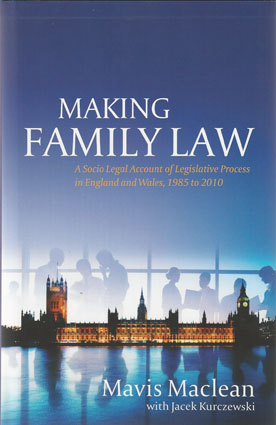
The legislative process is complex, encompassing a variety of aims and outcomes. Some norms and rules are embodied in law because we are simply expected by government to follow them. Others are there for entirely different reasons.
A legislator may wish to send messages about what constitutes desirable behaviour, or to demonstrate government's ability to deal with a local and short term issue, or to distract the electorate from other crises. Law is often, though not always, designed as a means to an end. Taking a sociological and empirically-based approach this book offers a rare insight into the real processes by which law-makers attempt to influence (or fail to influence) human behaviour.
This account of the legislative process in Westminster rests on the author's observations and discussion with key players from the standpoint of an academic adviser on research to the department responsible for family law making (originally the Lord Chancellor's department, then the Department for Constitutional Affairs and now the Ministry of Justice) and draws on her long-standing involvement in, and knowledge of, the processes of law-making.
Documenting the little understood processes which occur in Whitehall, and in particular how ministers, advisers and officials work together, it reveals a quite different picture from that of the rational law-maker imagined in textbooks.










